
Last updated October 30, 2026
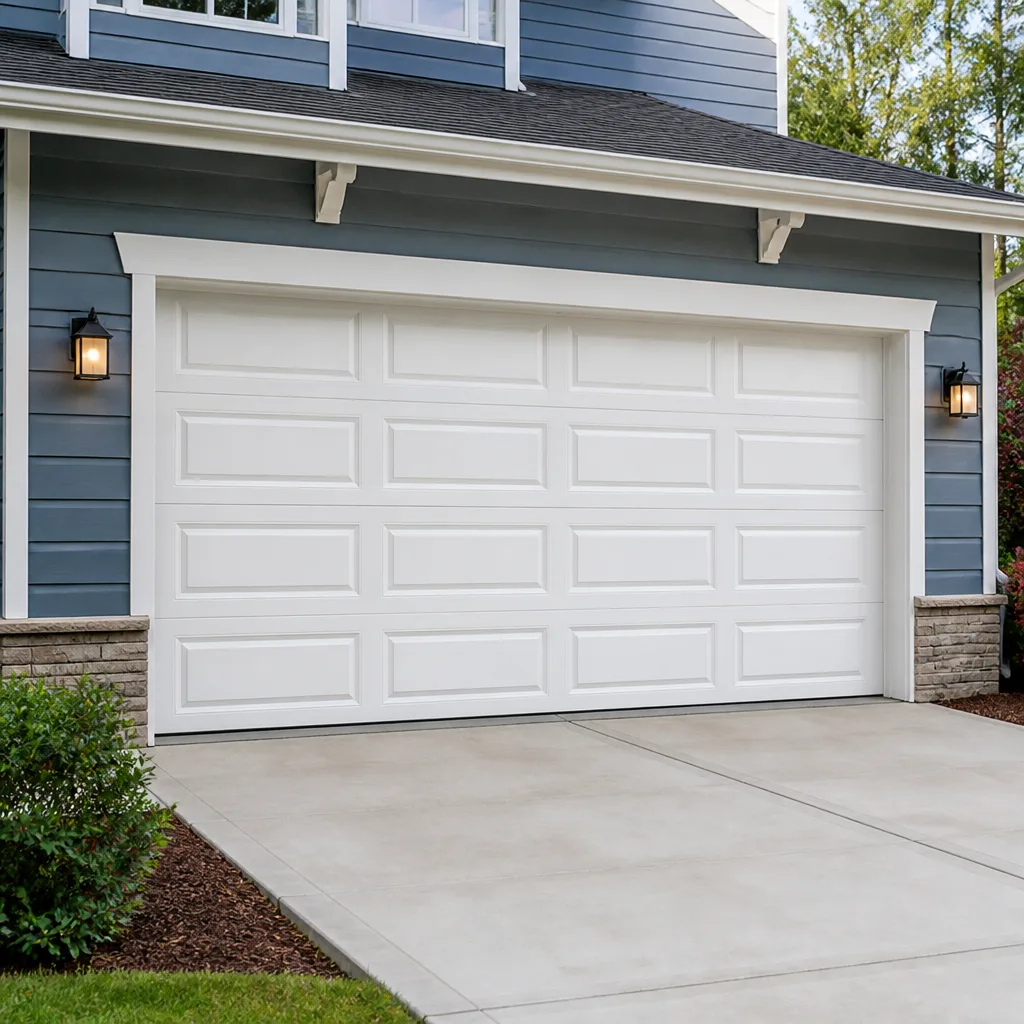 Raised-panel steel
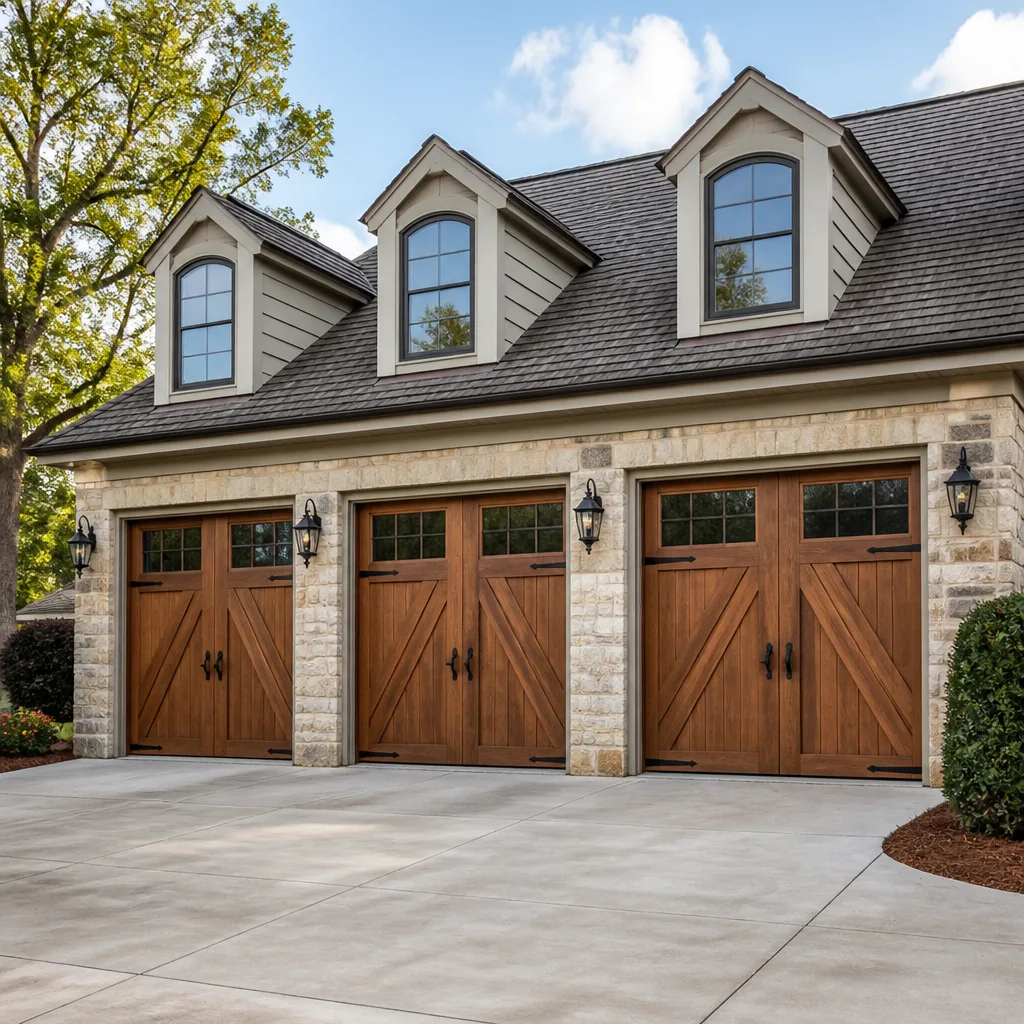 Carriage house
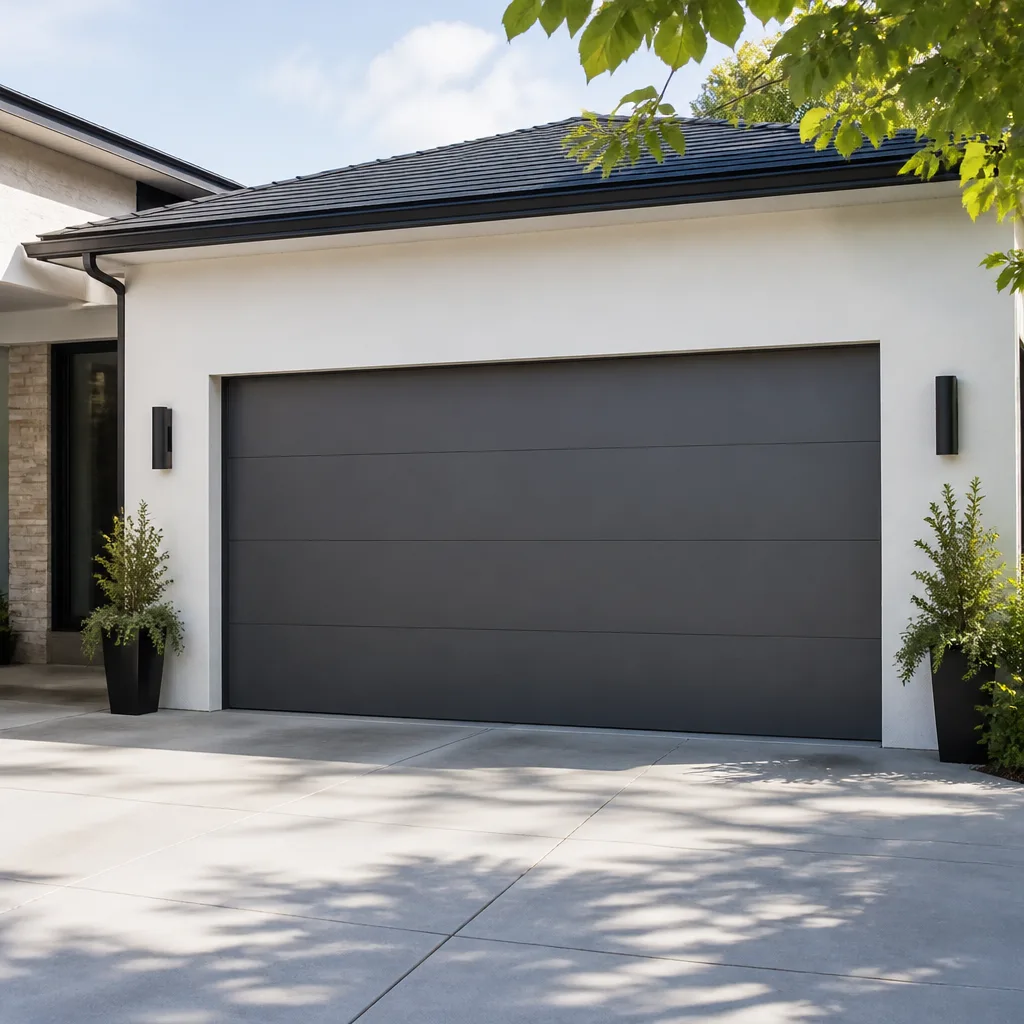 Modern flush
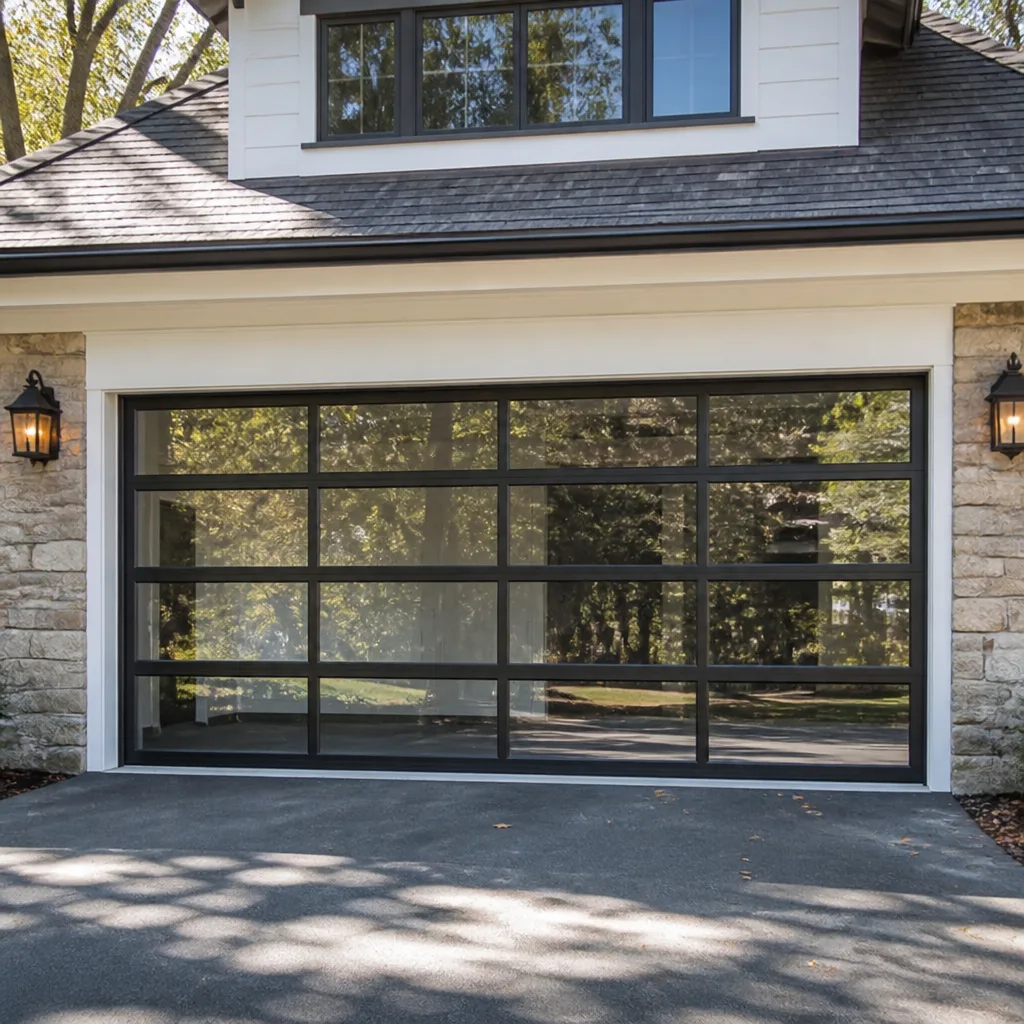 Full-view glass
 LiftMaster openers
 Chamberlain openers
Full 25-point door and opener safety check with every visit - springs, cables, rollers, tracks, and your LiftMaster or Chamberlain opener included
You get a price before we start. It does not change when the truck arrives.
Get your free estimateGarage Door Emergency Preparedness Guide for Ontario Homes
During a power outage, the number one call garage door companies receive isn’t “my door is broken.” It’s “I can’t get my car out and I don’t know where the manual release cord is.” Ontario sits in a seismically active region where the San Andreas and San Jacinto fault systems run practically through our backyards, and Santa Ana wind events routinely hit 60 to 70 mile per hour gusts through the Cajon Pass. Yet most homeowners in Ontario have never once tested whether they could open their garage door without electricity. This guide covers what actually happens to your garage door system during earthquakes, blackouts, and wind storms, and exactly what to do before, during, and after each event. For Garage Door Repair Troubleshooting: Common Problems and How to Fix Them, see our dedicated troubleshooting guide. By the time you finish reading, you’ll know how to get your car out of the garage when the power is dead, how to inspect your door after a shaker, and how to secure your door manually when Ontario’s wind season turns ugly.
Quick Answer
Garage door emergency preparedness in Ontario means knowing three things before trouble hits: how to operate the manual release cord without damaging your opener’s carriage, how to inspect your door for structural damage after an earthquake or wind event, and whether your opener has battery backup. Most homeowners wait until a Santa Ana wind storm knocks out power or a 5.0 shaker rattles the tracks to learn these skills, and that’s when mistakes cause real damage to the door, the opener, or the person pulling the cord. Preparing now takes about twenty minutes and costs nothing.
Styles & brands we work with
Table of Contents
- How to Use the Red Manual Release Cord the Right Way
- Battery Backup Openers: What Ontario Homeowners Should Know
- Earthquake Protocol: Inspecting Your Door Before You Operate It
- Santa Ana Wind Events: Balance, Seals, and Damage Documentation
- How to Secure a Garage Door Manually From the Inside
- Power Outage Preparedness: The 20-Minute Drill
- Structural vs. Cosmetic Damage: What Actually Matters
- Common Mistakes to Avoid
How to Use the Red Manual Release Cord the Right Way
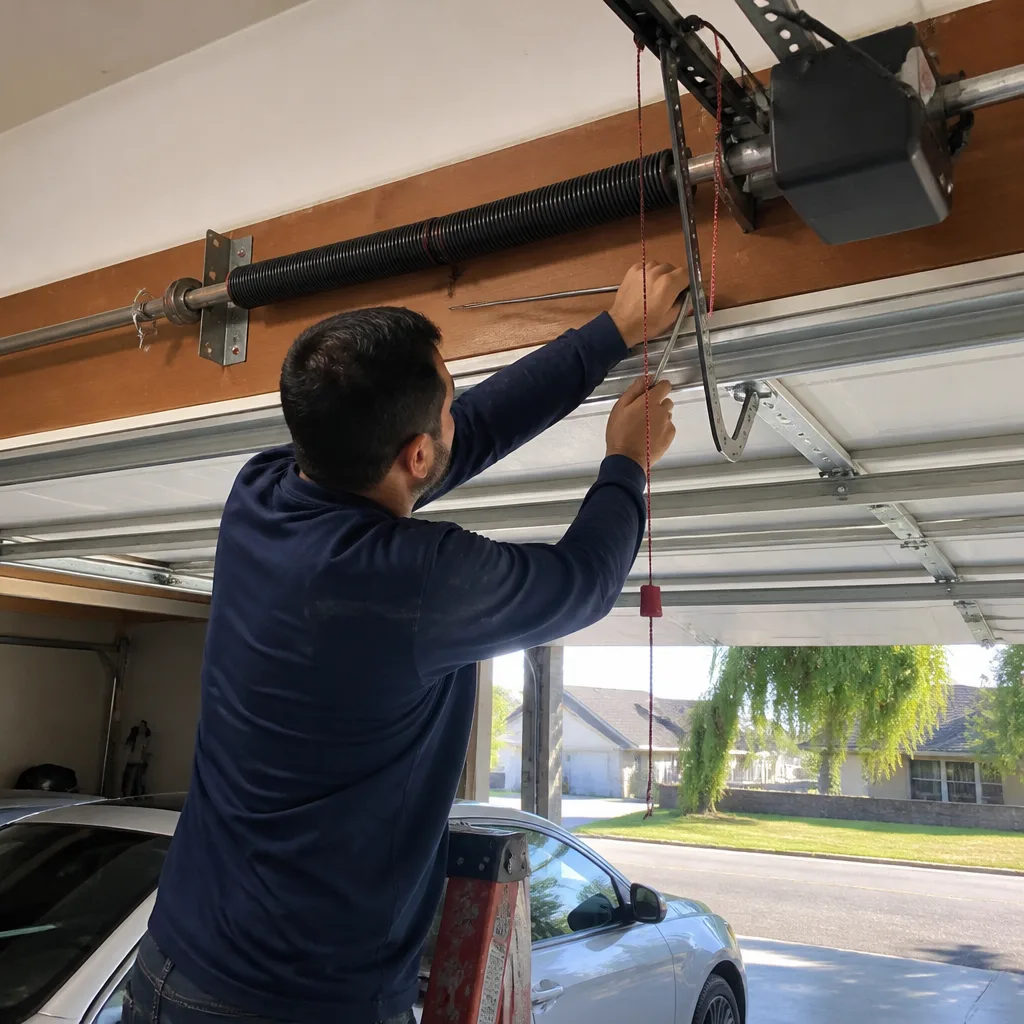
Every garage door opener has a red cord hanging from the trolley or carriage. That cord is the emergency release, and it disconnects the door from the opener so you can raise or lower the door by hand. The critical mistake we see in Ontario homes is pulling that cord while the door is under tension. If the door is in the open position when you pull the release, a broken spring or an unbalanced door can send it crashing down. If the door is closed and the opener was mid-cycle, the trolley can snap forward and damage the carriage assembly. Here is the sequence that works:
- Confirm the door is fully closed or fully open. Never release mid-cycle.
- Locate the red cord. It hangs from the rail above your car, usually within arm’s reach.
- Pull straight down firmly, then away from the door. You’ll hear a click as the trolley disengages.
- Test the door weight. Lift it about waist-high and let go. A properly balanced door stays put. If it drops, the springs are worn or broken, and you need professional help before operating it further.
- Once open, secure the door. If the springs are healthy, the door should stay up on its own. If it drifts down, clamp locking pliers onto the track above a roller to hold it.
Reattaching the trolley is just as important. Pull the release cord toward the door until the trolley clicks back onto the carriage, then press the opener button to re-engage. If the trolley is misaligned with the carriage, the opener will run but the door won’t move. Some openers, including newer LiftMaster and Chamberlain models, have an automatic re-lock that engages on the next cycle, so you may only need to run the opener once briefly to re-connect. If it won’t re-engage, don’t force it. That’s a service call, not a DIY moment.
One more thing about the release cord: it’s not a security feature. Anyone who can reach the cord can open your door. If you park a car outside in the Ontario heat and leave the garage partially cracked for ventilation, that red cord is reachable with a coat hanger in about thirty seconds. We’ll cover manual locking in a later section.
Battery Backup Openers: What Ontario Homeowners Should Know
Battery backup openers have become standard on new installations in California, and for good reason. When Southern California Edison shuts off power during high wind events to reduce fire risk, a battery backup opener gives you roughly 20 to 50 cycles over a 24 to 48 hour window. That’s enough to get your car out multiple times during a multi-day outage. But there are two things the box doesn’t tell you.
First, battery life under real conditions is shorter than the marketing suggests. Heat kills batteries, and an Ontario garage in August regularly hits 110 degrees. A backup battery that’s rated for 50 cycles at 70 degrees might deliver 25 cycles at 100. Second, the battery only powers the opener motor. It does not power the safety sensors, the wall control panel’s backlight, or any smart-home connectivity. During a blackout, your MyQ app will not work because your home Wi-Fi is down too. You’ll be using the wall button or a remote, and you’ll be opening and closing the door manually to preserve battery charge.
The major brands that offer reliable battery backup include LiftMaster’s 8550 and 8550W series, Chamberlain’s B970 and B6753, and Genie’s 7155-TKV and 6170H-B. If you have a Wayne Dalton, Craftsman, or Raynor opener from before 2015, your unit likely has no backup capability and would need a full opener replacement to add it. For Ontario homeowners, a battery backup opener isn’t a luxury. It’s the difference between getting to work during a PSPS outage and waiting for the power to come back. Our team at Cobblestone Garage Door Repair installs and services garage door opener repair in Ontario regularly, and the backup battery question is now the second-most-common after spring failures.
Earthquake Protocol: Inspecting Your Door Before You Operate It
Ontario sits within the Inland Empire’s seismic zone, and the last thing you want after a shaker is to open or close a garage door that’s partially pulled out of its tracks. The protocol is simple: before you touch the opener button after any earthquake you felt, inspect the door from inside the garage. Here’s the sequence:
- Look at the track alignment. Stand at the back of the garage and sight down each vertical track. If either track bows, twists, or has pulled away from the wall brackets, do not operate the door.
- Check the rollers. Look at each roller where it meets the track. A roller that’s popped out of the track but still attached to the hinge is fixable. A roller that’s snapped off completely means the door is not safe to move.
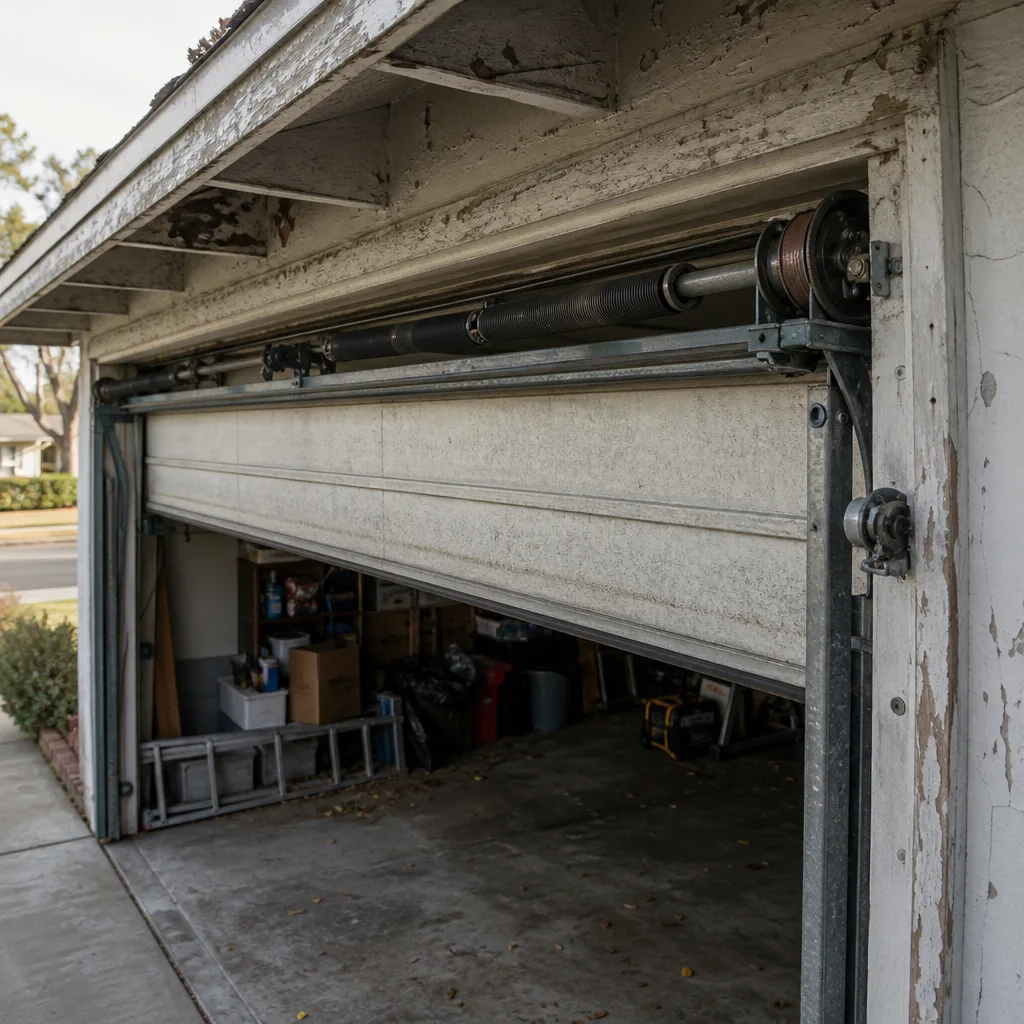
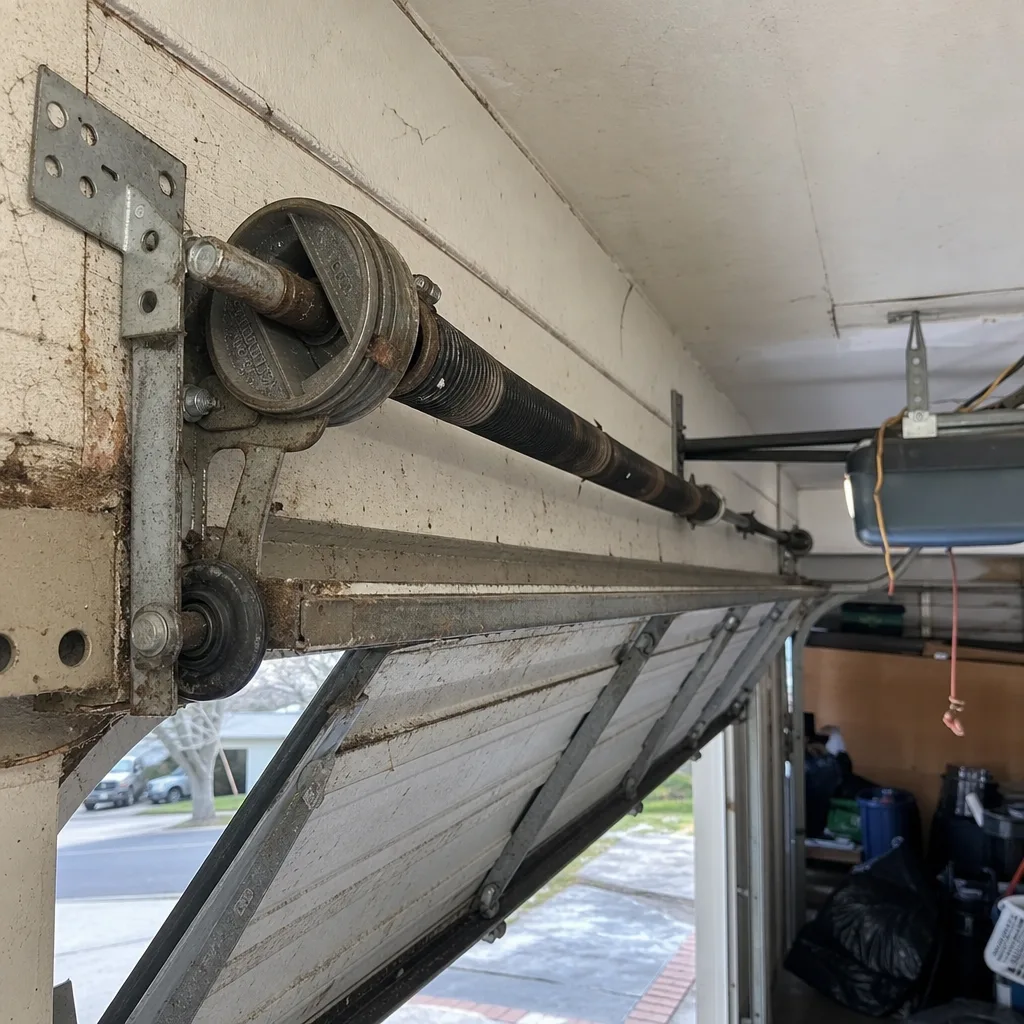
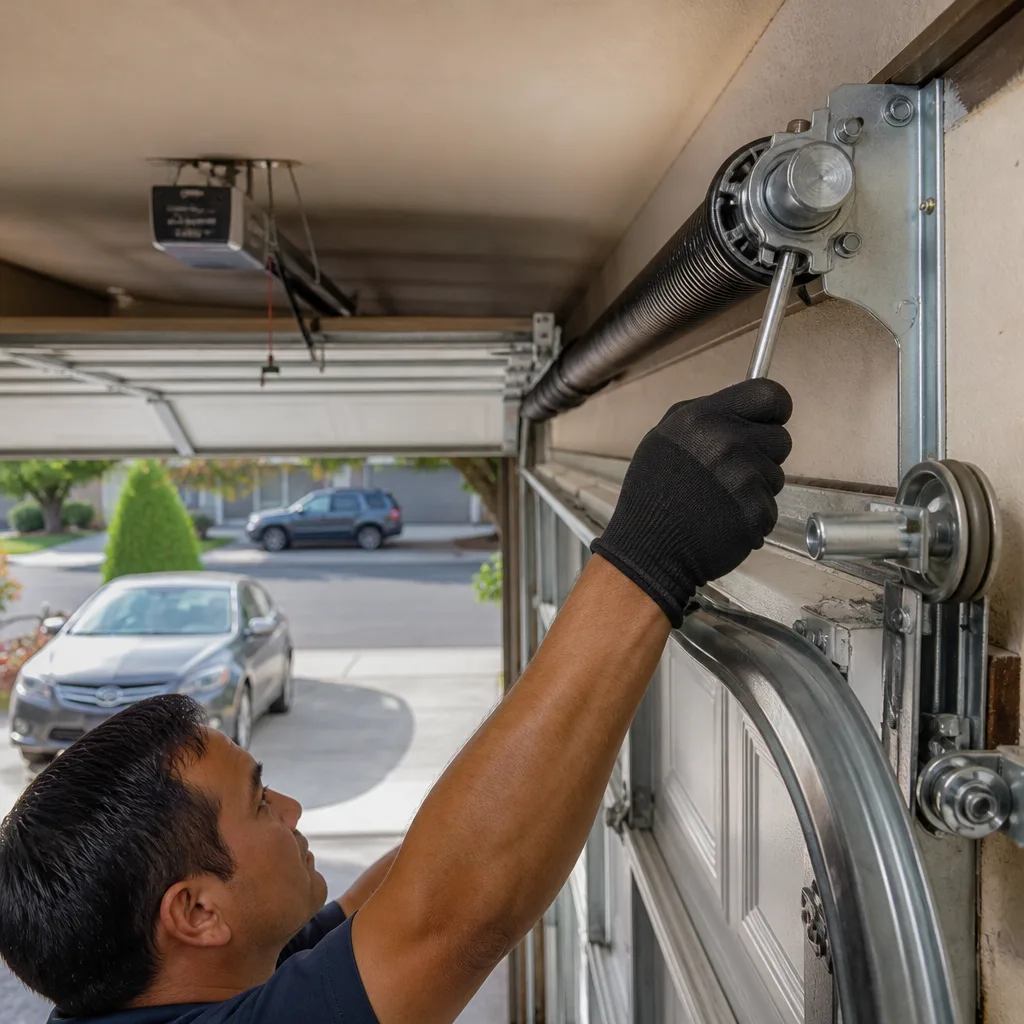
- Inspect the spring assembly. Look up at the torsion spring above the closed door. If the spring has snapped, you’ll see a visible gap in the coil. Do not attempt to open the door by hand. A door with a broken spring weighs 150 to 250 pounds and will come down hard.
- Check the header and the jamb brackets. Look for cracks in the wall around the mounting brackets. If the brackets are still tight but the drywall or stucco behind them is cracked, the door may be fine. If the brackets themselves have moved, that’s structural.
- Test the balance by hand. Only after the first four checks pass, pull the release cord and lift the door manually. It should move smoothly without grinding or catching.
Earthquake damage falls into two categories. Cosmetic damage is panels that are dented or scratched, weather seals that are torn, or minor track misalignment that a technician can adjust in an hour. Structural damage is a bent or twisted track, a snapped spring, broken hinges, or a door that’s shifted off its vertical plane. The second category needs a professional before the door is operated. If you’re not sure which category your door falls into, Garage Door Repair in Ontario is a service we offer with free estimates and same-day emergency calls for seismic damage.
Santa Ana Wind Events: Balance, Seals, and Damage Documentation
Santa Ana winds hit Ontario from October through March, and wind gusts through the Cajon Pass regularly exceed 60 miles per hour. Your garage door is a 16-foot-wide sail. When sustained wind pounds against a properly balanced door, the door flexes slightly and returns to shape. When wind pounds against an unbalanced door, the force concentrates on the hinges, the rollers, and the track brackets. That’s when you start seeing dented panels, popped rollers, and bottom seals that have torn away.
After any wind event over 50 miles per hour, check three things. First, run the door through a full cycle and listen for new grinding, rattling, or a difference in the way the opener sounds. A door that’s always been quiet and now clatters when it moves has likely lost a roller or loosened a hinge. Second, check the bottom rubber seal along the floor. Wind-driven debris scours that seal, and a torn seal lets dust, leaves, and rodents into the garage. Third, test the balance. Pull the release cord and lift the door halfway. If it stays, the springs are doing their job. If it drifts, the wind may have overstressed an already-tired spring.
If your door is dented or damaged and you’re filing a homeowner’s insurance claim, document everything before you call anyone. Take photos of the panels from multiple angles, video the door running through a cycle, and photograph any debris that’s embedded in the seal. Write down the date, the approximate wind speed from the National Weather Service report for Ontario, and the time you noticed the damage. Insurance adjusters respond to documentation, not descriptions.
One Ontario-specific note: many homes in the Ranch and along Haven Avenue have north-facing garage doors that take the brunt of Santa Ana winds directly. We see more wind-related service calls from those neighborhoods than from homes with south-facing or recessed garage doors that are protected by the house. If your door faces north, check the track bolts and hinge screws at the start of wind season. A five-minute bolt-tightening saves a lot of headache when the wind hits.
How to Secure a Garage Door Manually From the Inside
There are situations in Ontario where you need to lock a garage door without an opener. A power outage that lasts past the backup battery’s charge. A storm that’s torn the power line down. A security situation where you don’t want the door opening at all. Every garage door has at least one manual locking option, and most homeowners have never used it.
The simplest method is the manual slide lock. Look at the inside of the door, about waist height, on the vertical track or the door itself. Most doors have a small metal slide bolt that slides into a slot in the track. Push the bolt through, and the door cannot move. That’s the entire mechanism, and it works regardless of power, springs, or opener status. If your door doesn’t have a slide lock, it should have locking pliers or a vise grip in your emergency kit. Clamp the pliers onto the track directly above a roller on both sides. The door physically cannot roll past the clamp.
The third option is a twist-lock on the door handle, common on older doors. Insert the key, turn it, and a bar slides through a slot in the track. This is the same mechanism as the slide lock, just keyed. If you’ve lost the key, a locksmith or a garage door technician can replace it.
Here is the critical thing: a manual lock works because it physically blocks the door from moving. The opener cannot overcome it. If you engage the slide lock and then someone presses the opener button, the motor will strain, the belt or chain will slip, and you risk burning out the motor or shearing a gear. Whenever a manual lock is engaged, unplug the opener or switch the wall panel to the locked position. And if your door has an automatic opener with a manual lock engaged, make sure everyone in the household knows not to press the remote. We’ve replaced more stripped gears from this exact scenario than from any other cause in Ontario garages.
Power Outage Preparedness: The 20-Minute Drill
If you do one thing after reading this guide, do the twenty-minute drill. For more guides & resources, visit our blog. It costs nothing, and it tells you exactly where your gaps are before a real emergency exposes them. Here is the sequence for an Ontario garage:
- Locate your red release cord. Does it actually pull freely? Some cords are stuck or too short. Stand where you would stand during a real outage and pull it.
- Lift the door manually. Can you lift it with one hand? A balanced door weighs about 8 to 15 pounds. If it takes real effort, your springs are tired.
- Check the battery backup indicator. If you have a newer LiftMaster or Chamberlain, the wall panel has a battery light. If it’s red or off, the battery needs replacement.
- Test the manual lock. Engage it, then try to lift the door. It should not move.
- Time yourself. From realizing the power is out to having your car in the driveway should take under two minutes with a healthy door and a working release.
If you’re considering an opener replacement, ask about battery backup specifically. Models from LiftMaster, Chamberlain, Genie, and Raynor now include battery backup as standard or optional, and the cost difference is marginal compared to the cost of missing work or a medical appointment because you couldn’t get your car out. Our team handles garage door installation in Ontario and can match a backup-capable opener to any existing door, including older Wayne Dalton and Craftsman track systems.
Structural vs. Cosmetic Damage: What Actually Matters
After an earthquake or a wind storm, most homeowners focus on what they can see: dents, scratches, torn seals. What actually matters is what they can’t see. Here is a straightforward way to separate the two:
- Cosmetic damage includes panel dents, paint scratches, torn bottom seals, bent weather stripping. These affect appearance and weather resistance, but not safety. They can be addressed on a scheduled basis, not an emergency basis.
- Structural damage includes bent or twisted tracks, snapped torsion springs, broken hinges, a door that’s shifted in its opening, or wall brackets that have pulled out. These affect the door’s ability to stay up and move safely. They need professional attention before the door is operated again.
The fastest test is the balance test we mentioned earlier. A door that lifts easily and stays at the halfway point is structurally sound, even if it looks rough. A door that’s heavy, drifts, or won’t stay up has a spring or track problem, regardless of how clean the panels look.
We see a specific failure pattern in Ontario after seismic events: the torsion spring doesn’t snap, but it loses tension. The door will still open with the opener because the motor is doing all the work, but the spring isn’t counterbalancing the weight. You might not notice anything wrong for weeks, then the opener’s gear strips out from overwork and the door won’t move at all. If your door sounds like the opener is straining after an earthquake or wind storm, call a professional rather than running the door until something breaks. Cobblestone Garage Door Repair works on LiftMaster, Chamberlain, Genie, Clopay, Amarr, Wayne Dalton, Craftsman, and Raynor systems, so we can diagnose across brands rather than telling you we don’t service yours.
Common Mistakes to Avoid
- Pulling the release cord with the door open. This is the single most common garage door mistake we see, and it’s dangerous. A door with worn springs can crash down before you have time to react. Always confirm the door is closed before releasing, or hold the door firmly if it’s open.
- Operating the opener after an earthquake without inspecting the tracks first. A track that’s shifted even a quarter inch can bind the rollers, and the opener’s motor will force the door anyway, bending the track further. Inspect, then operate.
- Using the manual release cord as a regular locking method. The release cord disconnects the door from the opener. It does not lock anything. If you pull the cord and leave the door closed, anyone can lift the door from outside.
- Running the opener with the slide lock engaged. This strips gears and burns motors. If the slide lock is engaged, the opener must be unplugged or locked out at the wall panel.
- Waiting until wind season to check door balance. An unbalanced door is dangerous in normal conditions and catastrophic in 60 mile per hour Santa Ana winds. Check balance in October, before the wind arrives, not after your door is dented.
- Ignoring a noisy door after a storm. A new rattle or grinding sound is a warning. It means a roller is failing, a hinge is loose, or the track has shifted. Noise doesn’t fix itself; it tells you where the problem is.
See the difference
 Before
 After
 Before
 After
 Before
 After
When to Call a Professional
Call a professional if your door won’t stay up when you lift it manually, if the tracks are bent or pulled from the wall, if the spring is visibly snapped, if the door grinds or binds during operation, or if the opener runs but the door won’t move. These are structural and mechanical issues that get worse with use, not better. Cobblestone Garage Door Repair offers free estimates in Ontario and can usually diagnose the problem over the phone before we arrive. Call (866) 667-5857 and we’ll tell you what’s actually wrong, not what’s quickest to patch.
Frequently Asked Questions
Locate the red manual release cord hanging from the door rail, confirm the door is fully closed, pull the cord down and away from the door, then lift the door manually. If the door is hard to lift or won’t stay up, the springs need professional attention before you continue using the door by hand.
Battery backup openers typically provide 20 to 50 open-and-close cycles over 24 to 48 hours, but Ontario’s summer garage heat reduces that range. The battery only powers the motor, not the wall panel backlight, safety sensors, or smart-home features, so you’ll operate the door with the wall button or a handheld remote during an outage.
Only after you inspect the tracks, rollers, spring assembly, and wall brackets for damage. If the tracks are still straight and tight, the spring is intact, and the door lifts easily by hand, it’s safe to operate. If anything is bent, twisted, or pulled out, do not run the opener and call a professional.
Engage the slide lock on the vertical track at waist height, or clamp locking pliers onto the track above a roller on both sides. The door physically cannot move past the lock. Before doing this, unplug the opener or lock it out at the wall panel so no one presses the remote and strips the opener’s gear.
The current models with reliable battery backup are the LiftMaster 8550 and 8550W, Chamberlain B970 and B6753, and Genie 7155-TKV and 6170H-B. Older Wayne Dalton, Craftsman, and Raynor openers generally don’t have backup capability and would need a full opener replacement to add that feature.
Photograph the dented or damaged panels from multiple angles, video the door running through a full cycle, photograph any debris embedded in the bottom seal, and record the date, approximate wind speed from the National Weather Service report for Ontario, and the time you noticed the damage. Adjusters process claims faster when documentation is complete and dated.
The Bottom Line
Your garage door is the largest moving object in your home, and it’s also the one piece of equipment you interact with every single day. In Ontario, where earthquakes, wind events, and power outages are seasonal realities rather than hypotheticals, knowing how to operate your door manually, check its balance after a storm, and secure it from the inside is basic homeownership literacy. The twenty-minute drill we outlined costs nothing and takes less time than watching one episode of whatever you’re binging. Do it this weekend. When the power goes out or the ground shakes, you’ll already know exactly what to do. And if something isn’t right during your drill, our team at Cobblestone Garage Door Repair will tell you what’s actually wrong and fix it right the first time. Call (866) 667-5857 for a free estimate.
Written by the team at Cobblestone Garage Door Repair, serving Ontario since 2016.