
Last updated October 30, 2026
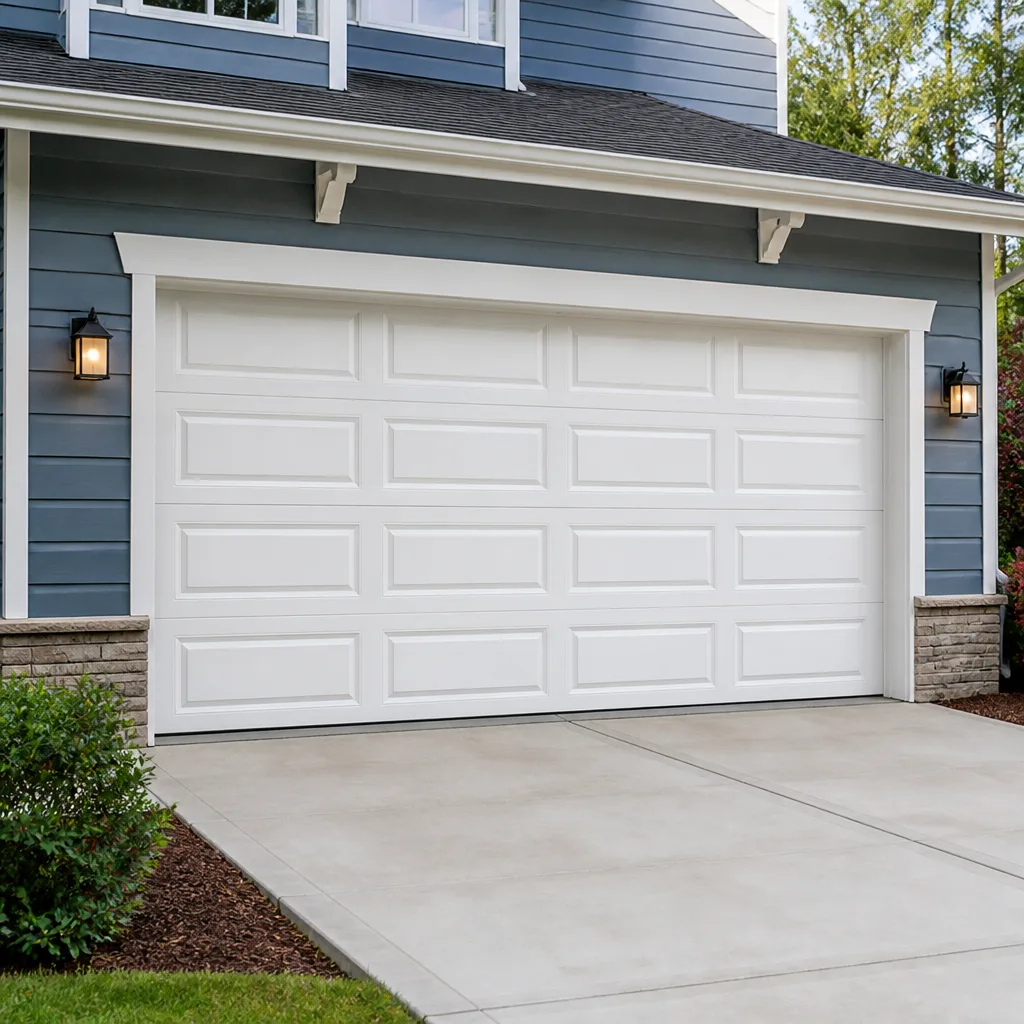 Raised-panel steel
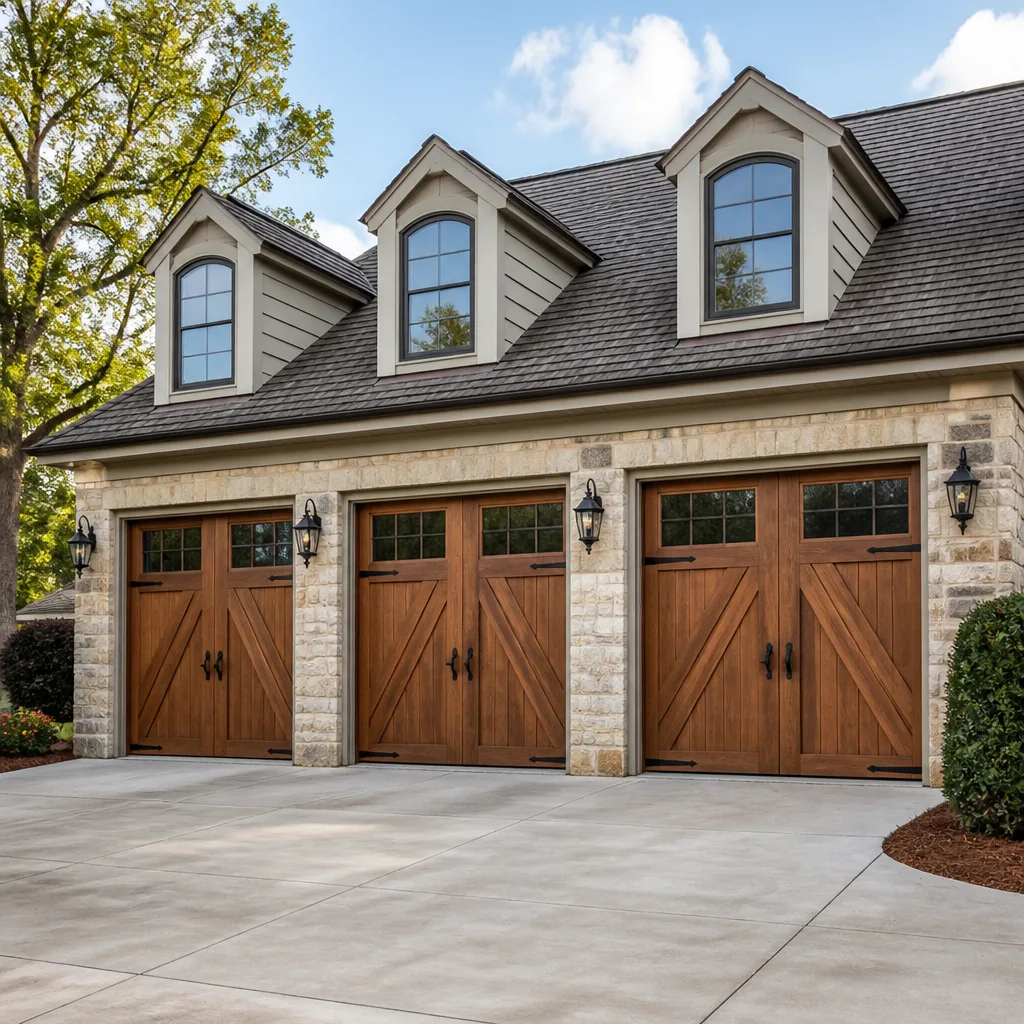 Carriage house
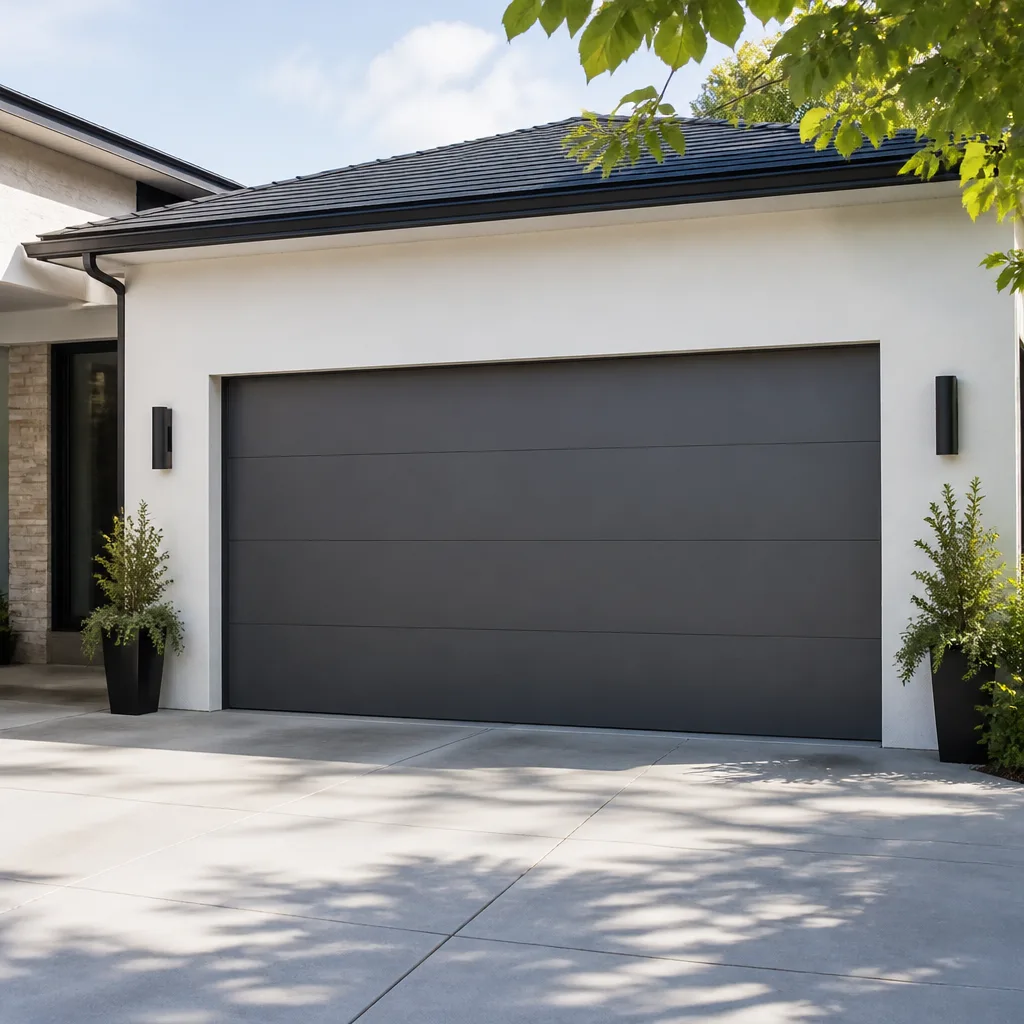 Modern flush
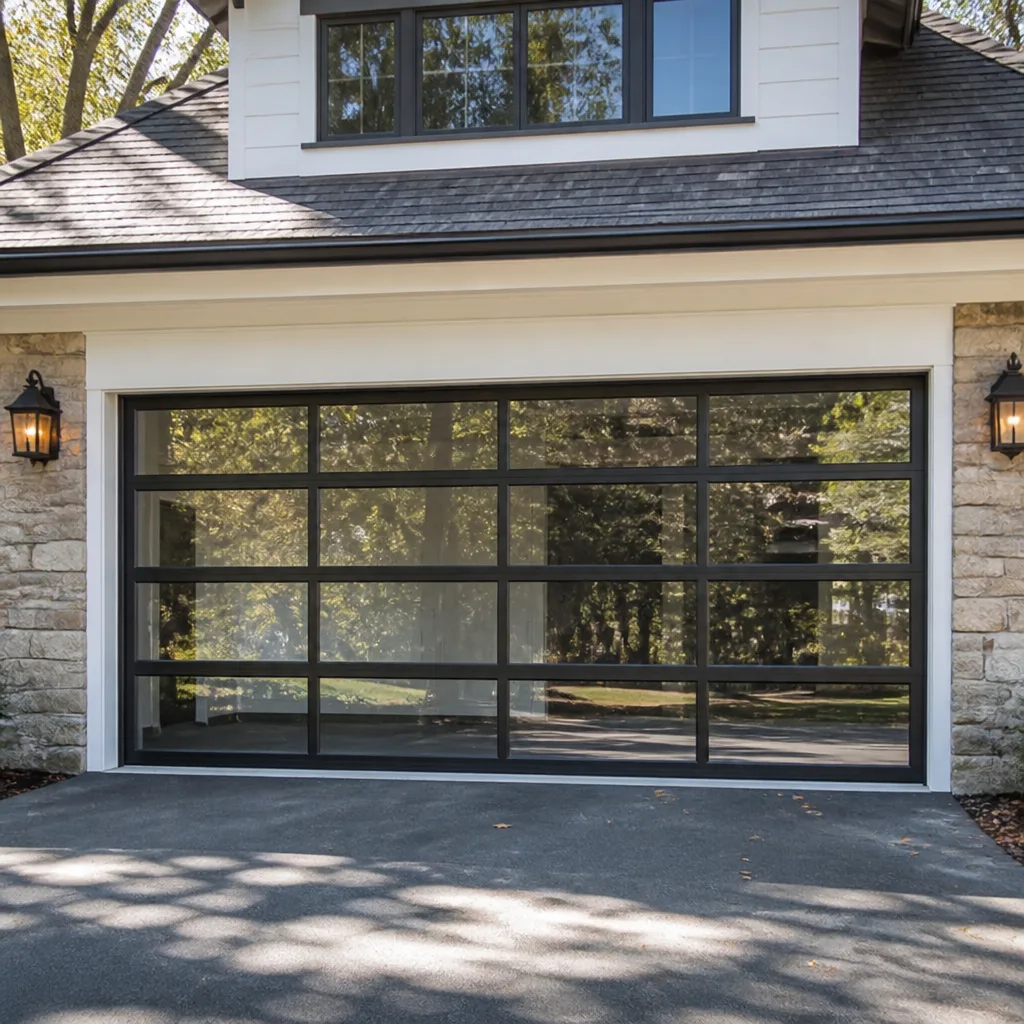 Full-view glass
 LiftMaster openers
 Chamberlain openers
Full 25-point door and opener safety check with every visit - springs, cables, rollers, tracks, and your LiftMaster or Chamberlain opener included
You get a price before we start. It does not change when the truck arrives.
Get your free estimateHow to Hire a Garage Door Contractor in Ontario: A Step-by-Step Guide
California does not require state licensing for garage door repair technicians. That means anyone with a truck, a business card, and a socket set can legally show up at your home in Ontario and start working on a 300-pound torsion spring system. No exam. No apprenticeship. No proof of insurance required by the state. The entire burden of vetting falls on you, the homeowner. This guide gives you the exact questions to ask, the documents to demand, and the red flags that separate a legitimate contractor from a liability waiting to happen. For more, see our Complete Garage Door Repair Guide for Ontario Homeowners.
Quick Answer
To hire a garage door contractor in Ontario, verify three things before scheduling anything: current insurance coverage (general liability and workers’ compensation), documented experience with your specific door brand, and an itemized written quote that lists parts and labor separately. Never proceed with a contractor who refuses to provide proof of insurance, cannot name the brand of your opener and door, or insists on a lump-sum bid without line-item detail.
Styles & brands we work with
Table of Contents
- The Three Insurance Documents to Request Before Any Technician Touches Your Door
- Why “We Carry All Brands” Is Not the Same as “We Are Authorized to Repair All Brands”
- How to Evaluate a Quote: Line Items That Reveal a Fair Price and Lump Sums That Hide Markup
- The 12 Questions to Ask Before You Sign Anything
- Red Flags Specific to Ontario’s Market
- Parts Sourcing: OEM vs. Aftermarket and When Each Makes Sense
- How to Verify a Contractor’s Track Record Without Relying on Star Ratings
- What a Legitimate Repair or Installation Visit Should Look Like
The Three Insurance Documents to Request Before Any Technician Touches Your Door
If a technician gets injured on your property in Ontario and the contractor does not carry workers’ compensation insurance, you can be held personally liable for the medical bills. This is not a theoretical risk. Garage door work involves high-tension springs, heavy panels, and electrical components. Injuries in this trade are real, and they happen to experienced technicians too.
Before anyone steps onto your driveway, request these three documents:
- General liability insurance certificate. This covers damage to your property if something goes wrong. A door panel dropped during installation can crack a driveway or damage a vehicle. Liability coverage should be at minimum $1 million, though many reputable Ontario contractors carry more.
- Workers’ compensation insurance certificate. This covers injuries to the technician. Without it, you become the de facto employer in the eyes of the law. Ask specifically whether the contractor carries workers’ comp or uses subcontractors who do.
- Current certificate of insurance (COI) with an expiration date. Here’s what most homeowners miss: a COI from 2022 is worthless. Insurance lapses. Contractors let policies expire. Request a certificate dated within the last 60 days and confirm the policy is active through the date of your service.
How to verify the documents are current: call the insurance provider named on the certificate. Every COI lists a policy number and an agent phone number. A 90-second call confirms whether the policy is active. Contractors who are legitimately insured expect this call. Contractors who are not will stall, deflect, or claim it’s “not necessary for a small job.” That response is your cue to end the conversation.
Our team at Cobblestone Garage Door Repair home carries full insurance coverage on every job in Ontario, and we’re glad to provide certificates before any work begins. If a contractor gives you friction on insurance, that friction is information.
Why “We Carry All Brands” Is Not the Same as “We Are Authorized to Repair All Brands”
Here’s the distinction that most Ontario homeowners never think to make: carrying parts for a brand and being authorized to service that brand are two different things.
A contractor who says “we carry all brands” means they stock or can source generic parts that fit multiple door systems. Springs, rollers, cables, and hinges are largely universal components. Any contractor can order a generic replacement spring from a wholesale supplier. That is not expertise. That is parts availability.
An authorized or deeply experienced multi-brand contractor understands the specific engineering of each manufacturer’s system. A Genie opener uses different drive architecture and logic board protocols than a LiftMaster. A Clopay door with Intellicore insulation has different weight balancing requirements than a Wayne Dalton with TorqueMaster springs. The repair approach, the calibration, and the diagnostic process all change based on what’s installed in your garage.
Why does this matter for warranty coverage? Manufacturer warranties on openers and doors often require that repairs be performed by technicians familiar with the product line. If a contractor installs the wrong torque rating on a spring because they don’t understand the door’s weight specification, the manufacturer will not cover the resulting damage. You eat the cost.
We service eight major brands in Ontario: LiftMaster, Chamberlain, Genie, Clopay, Amarr, Wayne Dalton, Craftsman, and Raynor. That breadth means our technicians diagnose across competing system architectures every day, not just the one or two brands a narrow shop stocks parts for. When a customer calls us about an Amarr door making a grinding noise, we know what we’re listening for. When a Craftsman opener won’t close, we know the sensor and logic-board failure patterns specific to that model line.
Before hiring any contractor in Ontario, ask this exact question: “Which brands do your technicians work on most frequently, and can you name the spring system on my door before you arrive?” A skilled contractor will ask you what door and opener you have, then tell you what they expect to find. A generalist will say “we handle everything” and leave it at that.
How to Evaluate a Quote: Line Items That Reveal a Fair Price and Lump Sums That Hide Markup
When you receive a quote for garage door work in Ontario, the format of the quote tells you more than the total. A legitimate contractor is not afraid of line items. A contractor padding the price hides behind a lump sum.
Here’s what a proper itemized quote should include:
- Parts with model numbers or specifications. Not “spring replacement” but “torsion spring, 2x, 218×1.75, 28-inch, oil-tempered.” The more specific, the more legitimate. Generic part descriptions make it impossible to compare quotes or verify what was installed.
- Labor as a separate line. Labor should be broken out from parts. If a contractor refuses to separate them, they’re hiding either an inflated parts markup or an inflated labor rate.
- Diagnostic fee (if any) and whether it’s credited toward the repair. Many Ontario contractors charge a service call fee. The question is whether that fee applies to the final invoice if you proceed with the work. Get the answer in writing.
- Disposal fees for old parts. Old doors, springs, and openers don’t fit in your trash bin. A legitimate contractor either includes haul-away in the quote or lists it as a separate line. If it’s not mentioned, ask.
- Warranty terms on both parts and labor. “We warranty our work” is meaningless. How long? Covers what? Parts and labor both, or parts only? Get the specific duration in the quote.
The price itself should feel predictable to anyone who’s hired a contractor in Ontario before. Spring replacement typically runs between $180 and $380 depending on the spring type and door weight. Opener replacement including installation runs $450 to $850 for a standard belt or chain drive. A full new door installation ranges from $1,200 for a basic single door to $4,000 or more for an insulated double door with windows. These are not fixed prices, but they’re the ranges you should expect to see. A quote 40% below these numbers is not a deal. It’s a warning.
And here’s the commitment any reputable Ontario contractor should make before work begins: the price quoted is the price you pay, agreed upon before the first tool comes out. If a contractor tells you the price “might change once we open it up,” that’s a conversation to have, not a blank check. Our standard is simple: we diagnose, we quote, we get your approval, then we work. You never owe more than what was agreed.
The 12 Questions to Ask Before You Sign Anything
Print this list or keep it on your phone. Every question has a right answer, and you’ll know a lot about the contractor within the first minute.
- Are you insured, and can you send me a current certificate of insurance before the visit? Right answer: yes, and they send it immediately. Wrong answer: hesitation, “we’ve never had a problem,” or “that’s not really necessary.”
- Do you carry workers’ compensation insurance for your technicians? Right answer: yes, directly or through a licensed subcontractor. Wrong answer: “my guys are independent contractors, so it’s not required.”
- What brands do you service most often? Right answer: a specific list of brands, including at least one of Genie, Clopay, Amarr, or Wayne Dalton if that’s what’s on your door. Wrong answer: “all of them” with no specifics.
- Can you tell me what spring system my door likely has based on the brand? Right answer: an explanation of torsion vs. extension springs, or a request to look at the door first. Wrong answer: confusion about what you’re asking.
- Do you quote parts and labor separately? Right answer: yes. Wrong answer: “we just give you one number, it’s easier that way.”
- Is your diagnostic fee credited toward the repair if I proceed? Right answer: yes, and it’s in writing. Wrong answer: no, or “it depends.”
- What warranty do you provide on parts and labor, and for how long? Right answer: a specific duration for each, such as one year on labor and up to lifetime on certain springs. Wrong answer: “we stand behind our work” with no numbers.
- Do you use OEM parts or aftermarket parts? Right answer: an honest discussion of both, with a recommendation based on the specific repair. Wrong answer: “OEM parts aren’t worth the money” or “we only use OEM” with no nuance.
- Who will be doing the work, an employee or a subcontractor? Right answer: a direct answer, either way, with the same insurance and warranty backing. Wrong answer: evasion.
- What’s your service area, and do you have a physical address in Ontario or nearby? Right answer: a specific answer. Wrong answer: “we’re mobile, we go everywhere” with no address on any document.
- Will you provide a written quote before any work begins, and will the final price match the quote? Right answer: yes to both, in writing. Wrong answer: “we’ll work it out as we go.”
- Can I see photos or references from recent jobs in Ontario? Right answer: yes, including before-and-after photos and recent customer feedback. Wrong answer: “privacy concerns” about sharing any evidence of their work.
You do not need to ask all 12 of every contractor. But if a contractor stumbles on three or more of these, you have your answer. For a deeper look at what goes into the work itself, see our guide to Garage Door Repair in Ontario.
Red Flags Specific to Ontario’s Market
Ontario’s garage door market has patterns that repeat year after year. Here’s what we see from inside the industry:
- Out-of-area contractors flooding local search ads after seasonal surges. Southern California’s heat waves strain garage door springs. A run of 100-degree days in Ontario often produces a spike in snapped springs, and suddenly search results fill with contractors from Riverside, San Bernardino, and Los Angeles bidding on Ontario jobs. Some are legitimate. Many are chasers following demand with no local reputation. Ask for an Ontario address or a service history in the city.
- Van with a magnetic sign and no company name on the invoice. Not always a dealbreaker, but combined with no insurance documentation, it’s a sign of a contractor who wants to be untraceable. A legitimate Ontario business has a name, a physical address or registered business location, and paperwork that matches.
- Cash-only pricing with a discount. The discount is never worth the loss of a paper trail. Any contractor offering a lower price for cash is not reporting the income or the job. You have zero recourse if the work fails.
- “We’re in your neighborhood this week.” This is a door-to-door sales pitch, not a service model. Legitimate garage door contractors in Ontario are too booked to go door-knocking. This line is used overwhelmingly by unlicensed, uninsured operators working out of personal vehicles.
- Pressure to sign a contract the same day. A legitimate contractor who provides a quote gives you time to compare. A contractor who says the price is only good for the next 30 minutes is not selling expertise. They’re selling urgency.
Parts Sourcing: OEM vs. Aftermarket and When Each Makes Sense
The parts question is not as simple as “OEM is always better.” It depends on what’s being replaced.
When OEM parts are worth the cost:
- Opener logic boards and drive systems. The control board in a LiftMaster opener is not interchangeable with a Chamberlain board, even though the same parent company manufacturers both. Using a board designed for a different model can cause sensor failures, intermittent operation, or a complete system failure within weeks. You want the exact OEM replacement for electrical components.
- Safety sensors and photo eyes. These are calibrated to specific opener models. Aftermarket sensor sets are a known source of repeated “door won’t close” complaints in Ontario. The savings on an aftermarket sensor are typically $20 to $40. It is not worth it.
- Door panels on newer doors. Color matching and thickness tolerance vary between manufacturers. An aftermarket panel on a Clopay door is rarely a true match, which leaves you with a visibly different panel and a door that looks patched.
When aftermarket parts are completely acceptable:
- Springs. The truth is that most torsion springs are made by a handful of manufacturers and branded for different door companies. What matters is not the name on the spring but the specification: the wire gauge, inner diameter, length, and coil count. A quality aftermarket spring with the correct specs performs identically to an OEM spring at a lower price. We source springs by specification, not by brand label, and we verify every spring against the door’s actual weight before installation.
- Rollers, hinges, and cables. These are commodity hardware items. Quality matters, but the difference between a premium aftermarket roller and an OEM roller is often just packaging. What matters is the material: nylon-coated rollers last longer and run quieter than steel, regardless of whose name is on the box.
- Weather stripping and seals. Aftermarket bottom seals and weather stripping are typically identical to OEM at half the price. There is no functional difference.
The key is transparency. A good contractor tells you which parts they’re using and why. If a contractor cannot or will not explain their parts sourcing, you are dealing with someone who either doesn’t know or doesn’t want you to know. Neither is acceptable. For opener-specific work, see our guide to Garage Door Opener Repair in Ontario.
How to Verify a Contractor’s Track Record Without Relying on Star Ratings
Star ratings are easily gamed in Ontario. Review platforms are flooded with fake reviews, and even legitimate review profiles only tell you about customer service, not technical competence. A contractor can have a perfect 5.0 rating and still be a mediocre technician who leaves doors misaligned and springs improperly torqued.
Here’s what actually reveals track record:
- Ask for before-and-after photos of recent work. A contractor who takes photos of their work is documenting their quality. A contractor with no photos has either never thought to document anything or has nothing they want to show you. Ask for photos of a spring replacement, a panel alignment, and an opener installation from within the last six months.
- Ask for a specific recent job in Ontario. Not “we work across the Inland Empire.” Ask for the neighborhood. “We replaced a Wayne Dalton door on a house in the Creekside neighborhood last month” is a verifiable statement. “We’ve done a lot of work in Ontario” is not.
- Check for a physical address or registered business location. A PO Box is not a business address. A contractor with no physical location is a contractor who is difficult to find when something goes wrong.
- Ask technical questions you already know the answer to. This is the most reliable test. Learn one fact about your door system before they arrive: your spring type, your opener drive type, your door weight evaluation. Then ask the contractor something specific. A skilled technician corrects you or confirms with detail. A fraud nods and agrees with whatever you say.
- Look at how they diagnose before quoting. A legitimate contractor inspects the door, the rollers, the cables, the spring system, and the opener before giving you a price. A contractor who quotes without looking is guessing. Guessing at garage door work is expensive.
What a Legitimate Repair or Installation Visit Should Look Like
Here’s what you should expect from a quality contractor in Ontario, from the moment they arrive to the moment they leave.
Arrival and diagnosis. The technician shows up on time or calls if delayed. They walk the door through a full cycle, watching and listening. They inspect the springs, cables, rollers, hinges, track alignment, and the opener. They explain what they found in plain language, not jargon. If you understand the problem after they explain it, that’s a good sign. If you’re more confused than before, that’s a warning.
Quote and approval. The technician provides a written quote with parts and labor separated. They explain what each line item means and why it’s needed. They tell you what’s urgent, what’s optional, and what can wait. They get your approval before doing anything. If at any point you feel rushed, you have the wrong contractor.
Work and payment. The technician completes the work, tests the door through multiple cycles, checks balance and safety reversal, and cleans up after themselves. The final price matches the quote. Payment is processed with a receipt that itemizes everything, including warranty terms.
This is the standard we hold ourselves to on every job, whether it’s a spring replacement, an Garage Door Installation in Ontario, or a full system overhaul. If a contractor’s process doesn’t resemble this, they’re not meeting the baseline for professional work in this trade.
Common Mistakes to Avoid
- Hiring the cheapest quote without checking insurance. The lowest price in Ontario is often low because the contractor has no insurance, no workers’ comp, and no overhead. You save $75 on the quote and risk thousands in liability if a technician gets hurt on your property.
- Not asking about the spring system before agreeing to a price. Torsion springs and extension springs cost different amounts to replace. A contractor who quotes without asking which system you have is guessing, and you’ll pay for the guess.
- Accepting a verbal quote. Verbal quotes are unenforceable and conveniently forgotten. If it’s not in writing, it doesn’t exist. Demand a written quote before work begins, every time.
- Replacing parts instead of diagnosing the system. A snapped spring is often caused by an underlying issue: an unbalanced door, worn rollers, or a misaligned track. Replacing the spring without addressing the cause means you’ll replace the spring again within a year. A skilled technician diagnoses the system, not just the symptom.
- Skipping the safety reversal check after a repair. Your garage door’s auto-reverse function is a critical safety feature. After any repair or installation, a technician should test that the door reverses when it meets resistance. If yours doesn’t do this check, the wrong company is under your door.
- Hiring based on the first search ad you see. Search ads in Ontario are dominated by out-of-area contractors who pay for visibility, not local companies with a reputation. Scroll past the ads. Look for organically listed local businesses with Ontario addresses and verifiable local history.
- Not asking about haul-away and cleanup. Old doors, springs, and openers don’t go in your weekly trash. Confirm that the contractor removes all old parts and leaves your garage as clean as they found it. If they don’t mention it, they’re leaving it for you.
See the difference
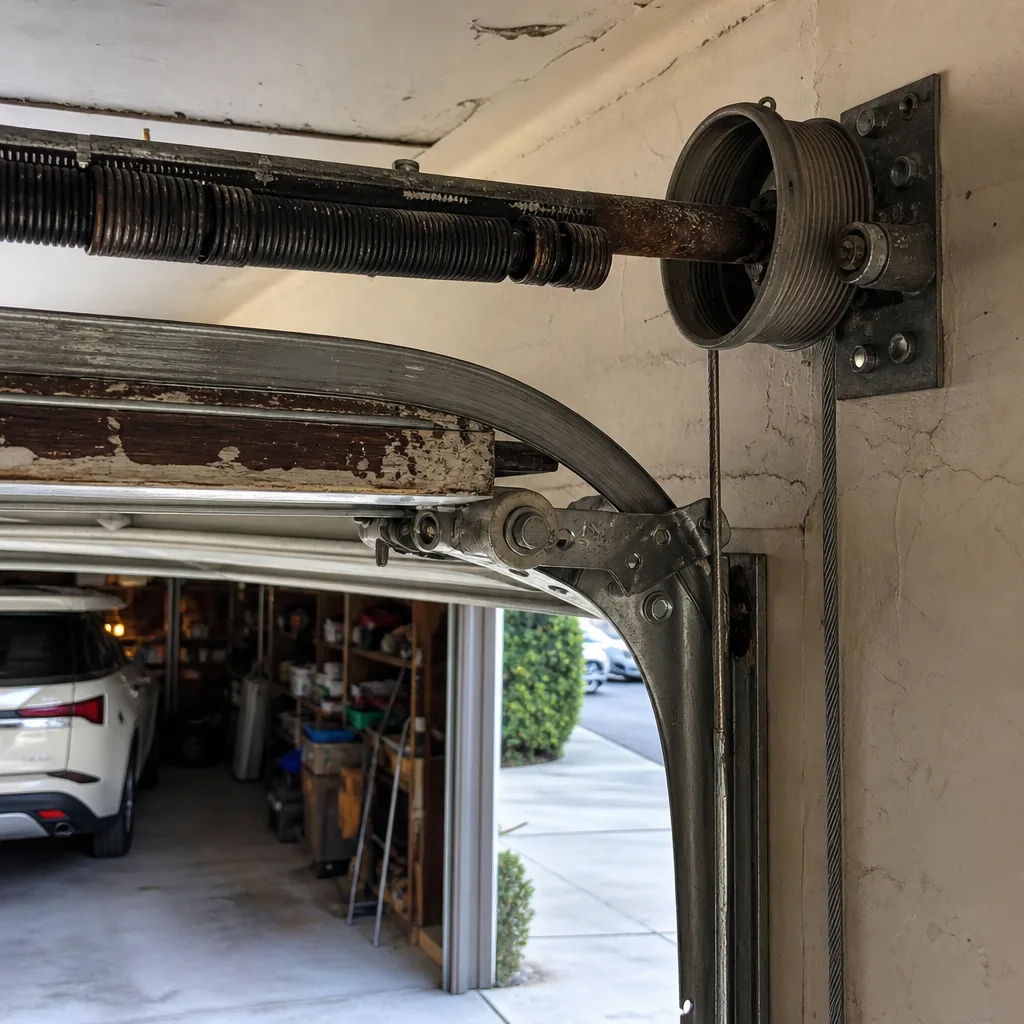 Before
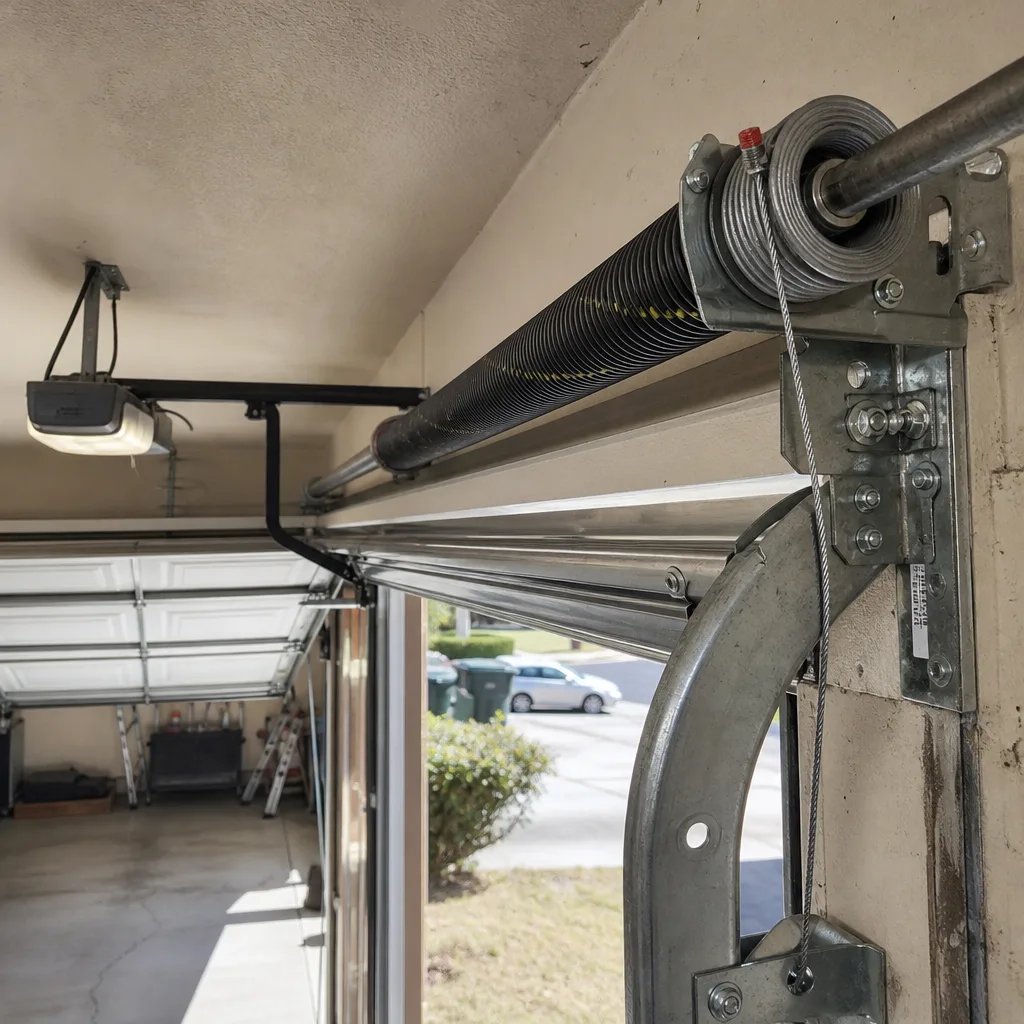 After
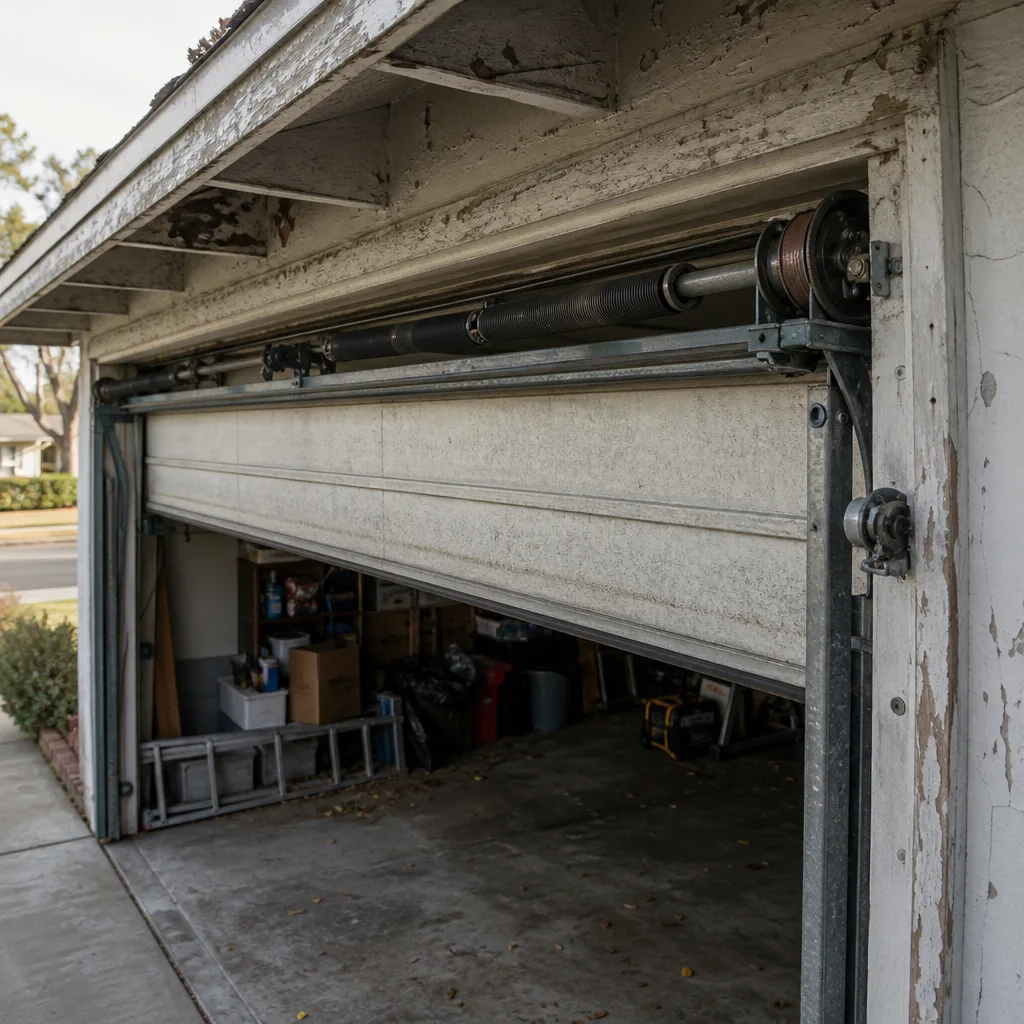 Before
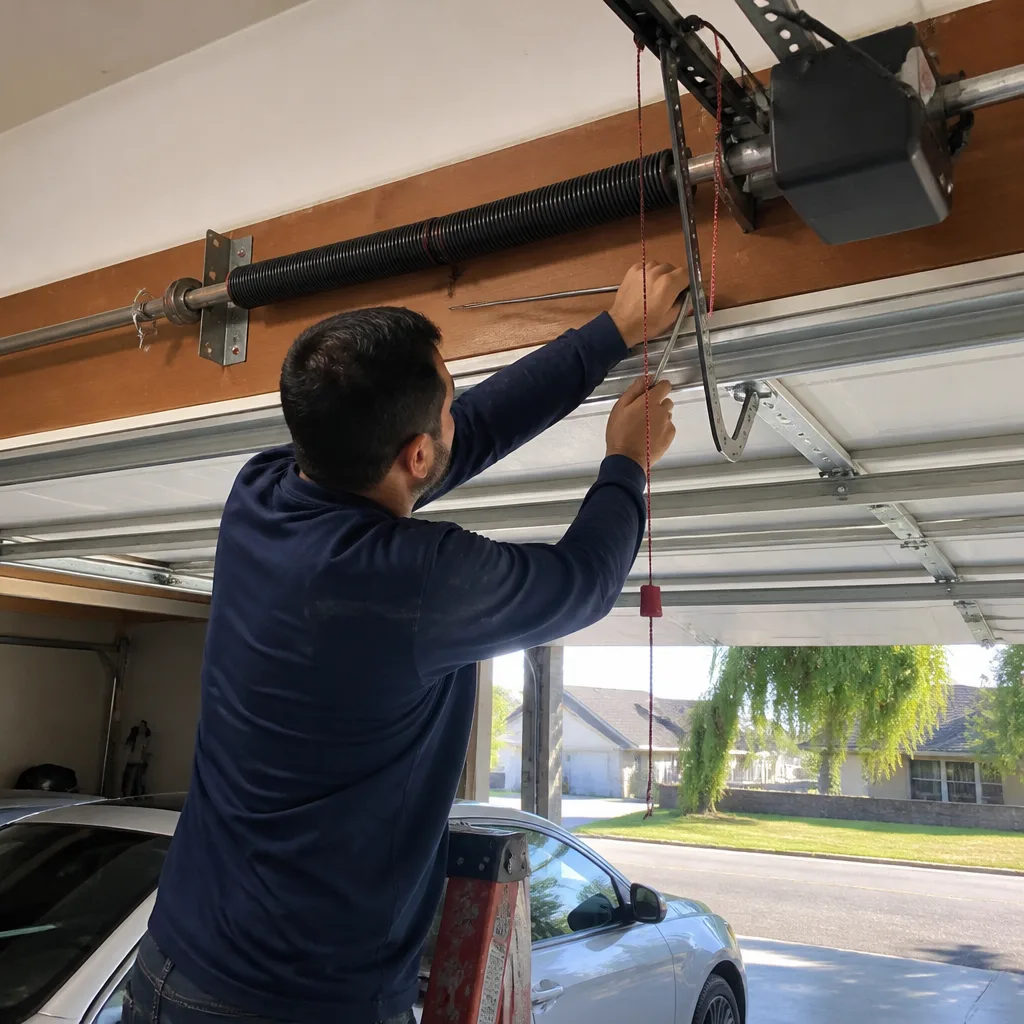 After
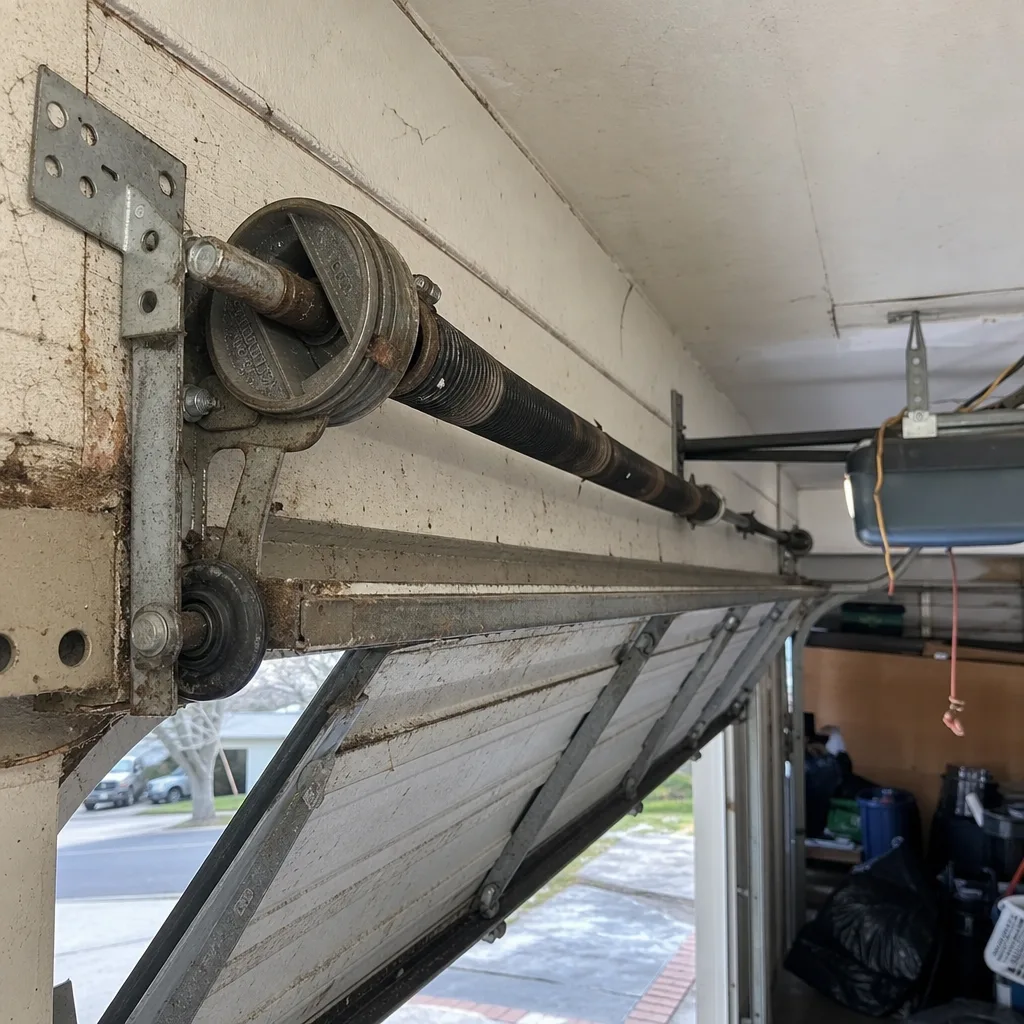 Before
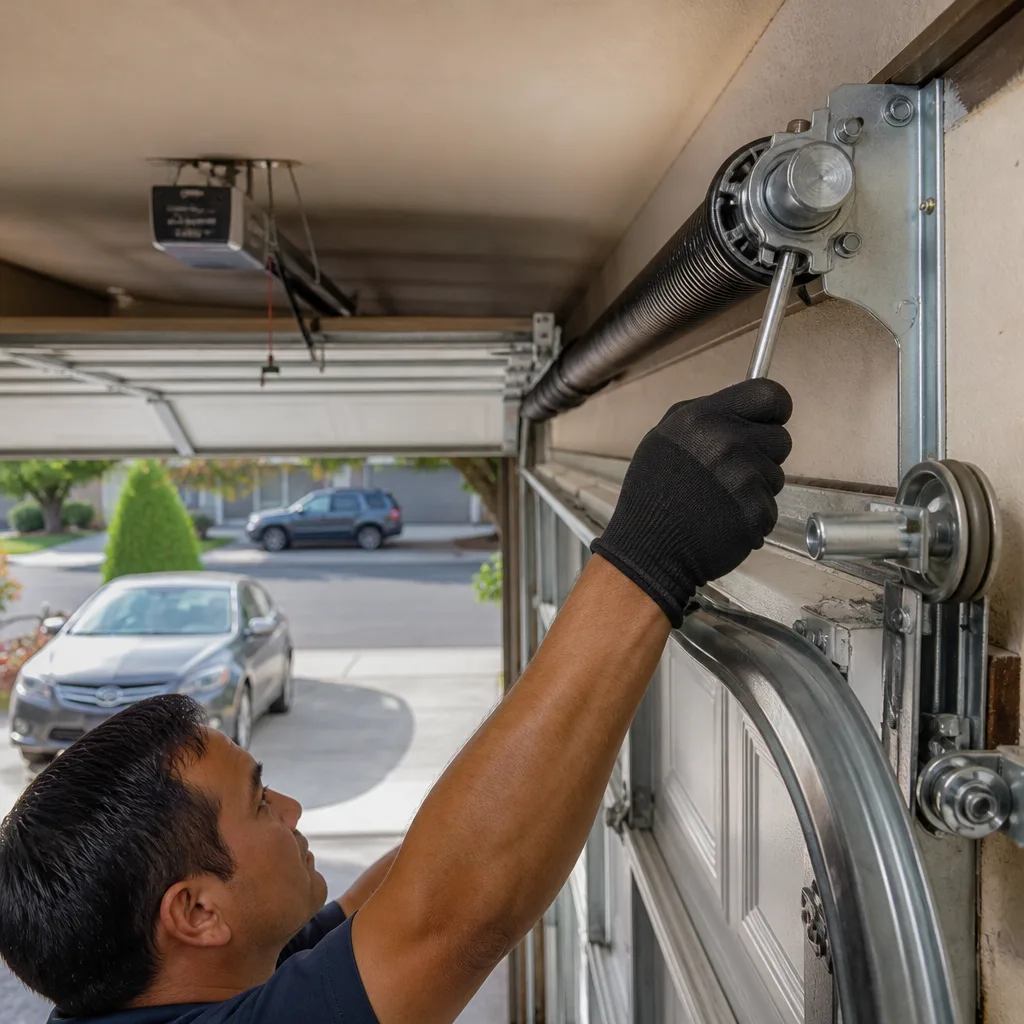 After
When to Call a Professional
Some garage door problems are safe to troubleshoot yourself: a remote with a dead battery, a blocked photo eye, a door that’s slightly out of track and needs a visual check. But anything involving the spring system, the cables, or the opener’s electrical components is professional territory. Torsion springs under tension carry enough stored energy to cause serious injury if released incorrectly. Extension springs can snap and send metal flying. Door cables under load can sever fingers. A garage door that falls because a cable snaps can weigh 300 pounds or more. No homeowner should attempt spring or cable work without professional training and equipment. The cost of hiring a licensed, insured contractor in Ontario is always less than the cost of a hospital visit or a door falling on someone. Cobblestone Garage Door Repair home offers free estimates in Ontario, and we’ll tell you what’s actually wrong before we ever ask for a dollar. Call (866) 667-5857 to schedule a diagnostic visit.
Frequently Asked Questions
California does not license garage door contractors at the state level, so there is no license number to verify. Your vetting instead hinges on insurance, experience, and documentation. Ask for a current certificate of insurance, proof of workers’ compensation, and a written quote before any work begins. These three documents tell you more than any license ever would.
Spring replacement in Ontario typically costs between $180 and $380 depending on the spring type and door weight. Opener replacement runs $450 to $850 including installation. Full door installation ranges from $1,200 to $4,000 or more based on size, insulation, and material. Any quote significantly below these ranges warrants extra scrutiny. You can always call (866) 667-5857 for a free estimate on your specific system.
Most spring replacements and minor repairs can be completed the same day or within 24 hours by a well-stocked contractor in Ontario. Larger jobs, like full door installation or custom panel replacement, require ordering and scheduling. Ask the contractor whether they carry common springs and parts on the truck before you book, and get a same-day commitment if the repair is urgent.
A legitimate contractor provides a fixed, written quote before work begins and honors that price. If the diagnosis reveals additional issues after the door is opened up, the contractor should stop work, explain the new findings, and get your approval before proceeding. You should never face a surprise invoice. The price is quoted and agreed before any work starts, full stop.
Good ones do. A contractor who arrives with common torsion springs, rollers, cables, hinges, and opener replacement parts in multiple sizes can often complete the repair in one visit. A contractor who has to leave and return with parts is either under-stocked or new to the trade. Ask before you book: “Do you carry parts for my door brand on the truck?” If the answer is no, keep looking.
A skilled Ontario contractor should be comfortable with the major national brands commonly installed in Southern California homes: LiftMaster, Chamberlain, Genie, Clopay, Amarr, Wayne Dalton, Craftsman, and Raynor. If a contractor tells you they don’t service your brand, that’s not a red flag on them; it’s a practical limitation. The best contractors in Ontario work across all major brands without blinking.
The Bottom Line
Hiring a garage door contractor in Ontario comes down to verification, not faith. Verify insurance before anyone touches your door. Verify brand experience before you trust a diagnosis. Verify the quote format before you trust the price. Verify the parts sourcing before you sign. The contractors worth your business will welcome every question on this list because they have honest answers. The ones who will cost you money and create headaches will resist. That resistance is the signal. Ontario has hundreds of garage door contractors to choose from, and the barrier to entry is low. You are the barrier, and every question you ask filters the risk. For more guides & resources, explore our blog, or call (866) 667-5857 today for a free estimate from a garage door specialist who will answer every one of these questions before you ask.
Written by the team at Cobblestone Garage Door Repair, serving Ontario since 2016.