
Last updated October 30, 2026
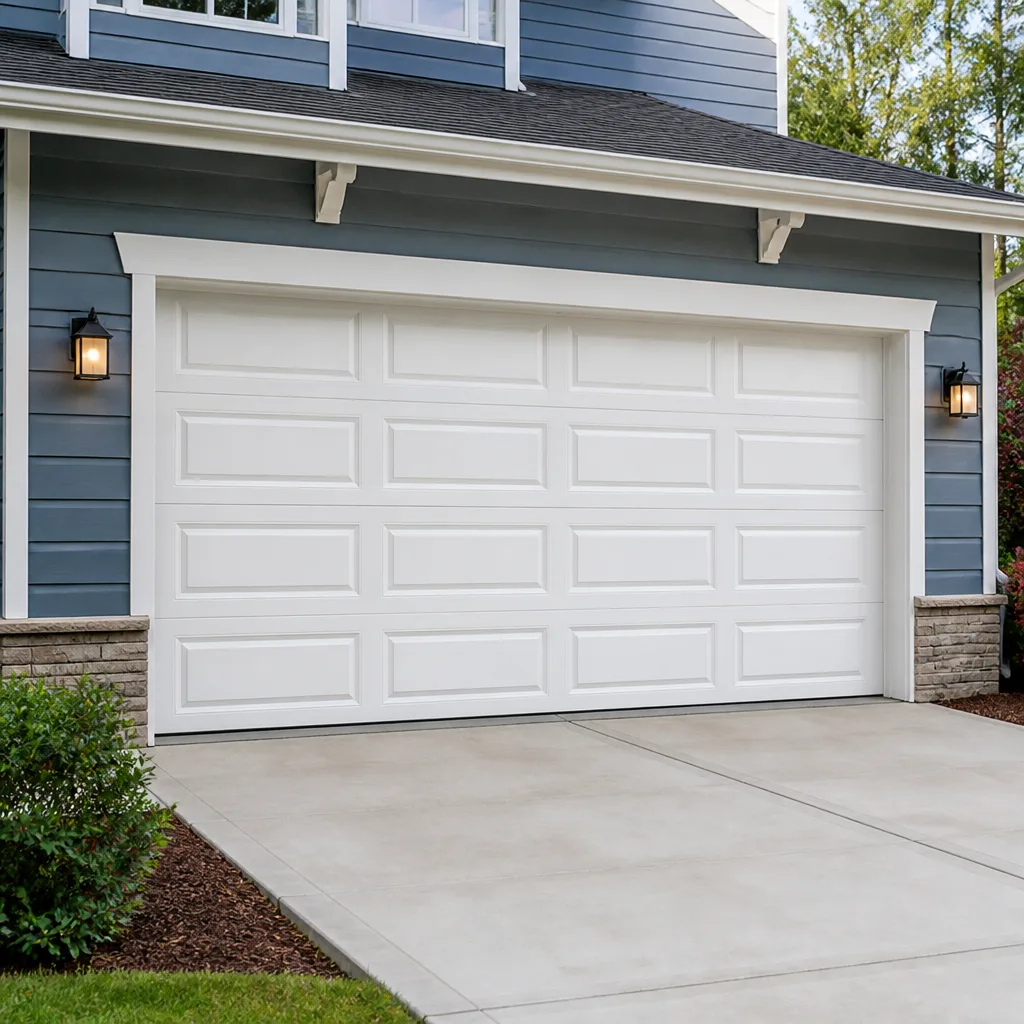 Raised-panel steel
 Carriage house
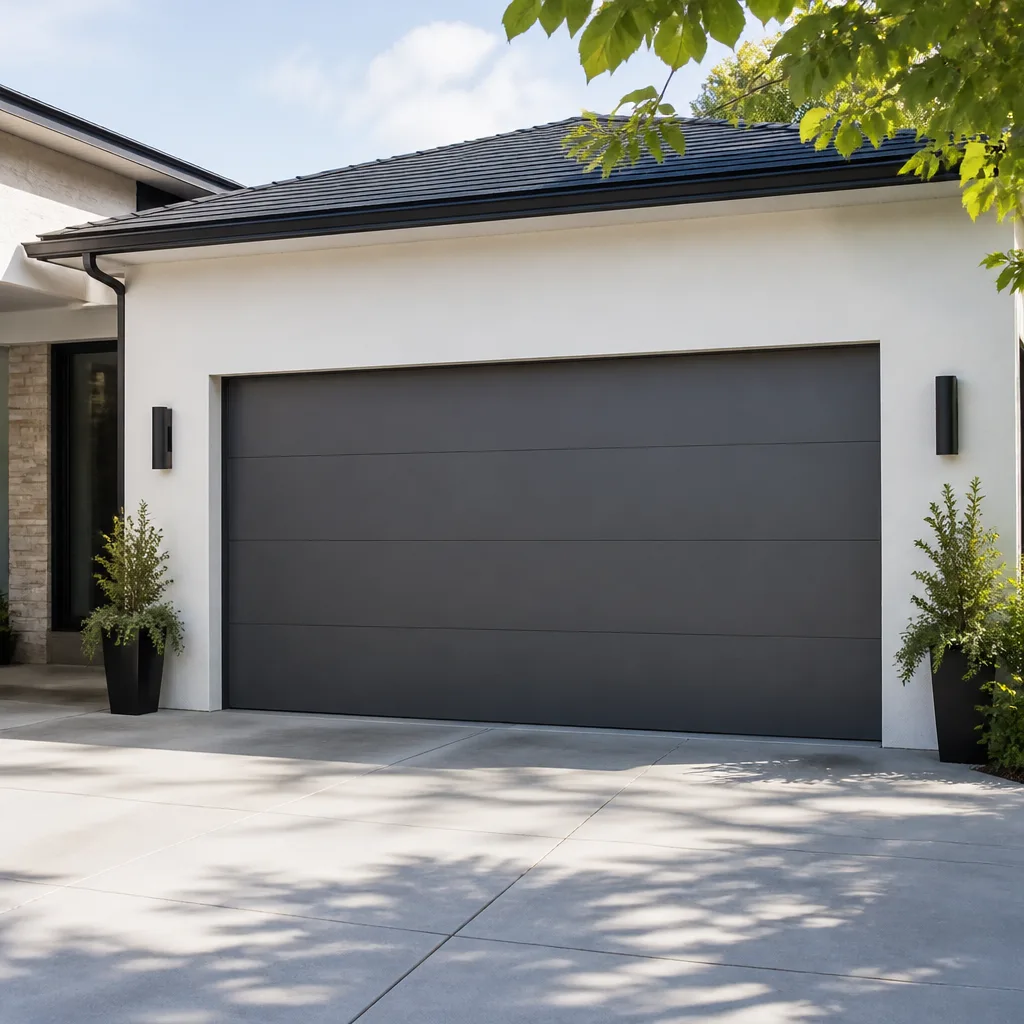 Modern flush
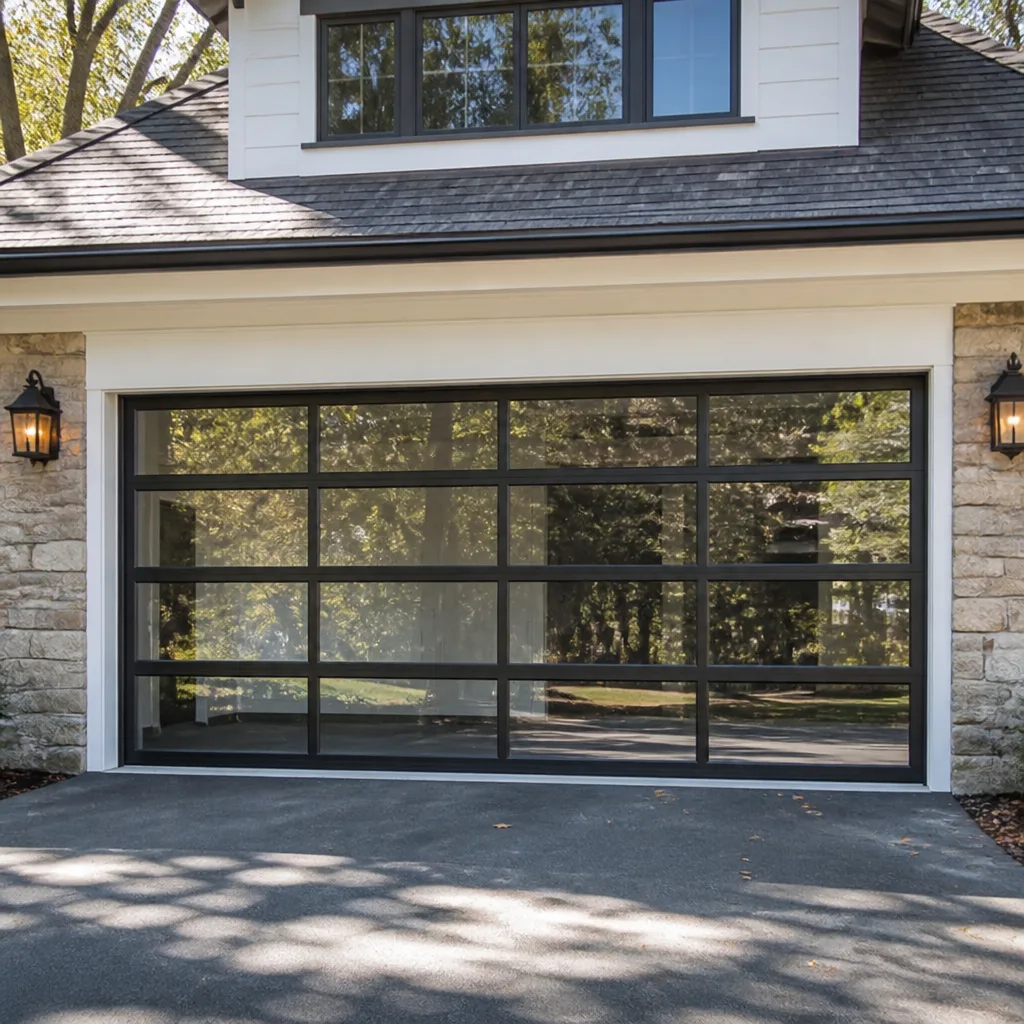 Full-view glass
 LiftMaster openers
 Chamberlain openers
Full 25-point door and opener safety check with every visit - springs, cables, rollers, tracks, and your LiftMaster or Chamberlain opener included
You get a price before we start. It does not change when the truck arrives.
Get your free estimateSeasonal Garage Door Care for Ontario: Year-Round Homeowner’s Guide
Most garage door maintenance guides read like they were written for Chicago or Denver: drain the ice melt, lubricate for sub-zero operation, watch for frost heave on the slab. Follow that advice in Ontario and you’ll spend October worrying about snow that never comes while your door’s hardware quietly expands under triple-digit summer heat. The Inland Empire’s actual stress pattern is different: a long, brutal heat arc from June through September, followed by Santa Ana wind events in fall, with only a handful of genuinely cold nights all winter. This guide is built around that reality, because treating your garage door like it lives in the Midwest means servicing for the wrong failure modes at the wrong time.
Styles & brands we work with
Quick Answer
Seasonal garage door care in Ontario, California means prioritizing late-spring heat prep and fall Santa Ana wind hardening, not winterizing. Your highest-risk window is August through October, when thermal expansion peaks and high-wind events stress every bracket, bolt, and seal. A simple twice-yearly inspection cycle, timed around these two pressure points, prevents the vast majority of repairs we see in this market.
Table of Contents
- Spring (March – May): Pre-Heat Inspection Before the Temperature Climb
- Summer (June – September): Opener Overheating and Thermal Expansion
- Fall (October – November): Santa Ana Wind Hardening
- Winter (December – February): Bottom Seal Stiffening on Cold Concrete
- Year-Round: Door Balance and When to Adjust Spring Tension
- Year-Round: Lubrication Schedule for Inland Empire Conditions
- Common Mistakes to Avoid
- When to Call a Professional
- Frequently Asked Questions
- The Bottom Line
Spring (March – May): Pre-Heat Inspection Before the Temperature Climb
By late May, daytime highs in Ontario regularly push past 90°F. The weeks before that climb are your most valuable maintenance window of the year. Here’s why: most of the damage summer inflicts on a garage door system starts with small failures that were detectable in spring. Cracked weatherstripping lets hot, dry air into the garage, which accelerates lubricant breakdown on rollers and hinges. Loose track fasteners shift as metal expands, then bind the rollers under load. A spring slightly out of balance in April becomes a motor-destroying strain by August. Our Garage Door Repair in Ontario work consistently peaks in late summer, and a high percentage of those calls trace back to spring conditions that were overlooked.
Spring is also the right time to address any winter UV damage. Ontario’s winter sun is intense even on cool days, and rubber weatherstripping takes a beating from December through February. By March, that seal is often micro-cracked and ready to tear.
Spring inspection checklist
- Weatherstripping: Run your hand along the perimeter seal, the bottom seal, and the seal between panels. Look for brittleness, cracks, or flattened sections that no longer spring back. Replace anything that’s lost its flexibility before the heat arrives.
- Track alignment: With the door closed, squat at eye level with each vertical track. Look for gaps between the track and the wall, bent sections, or fasteners that have backed out over the winter.
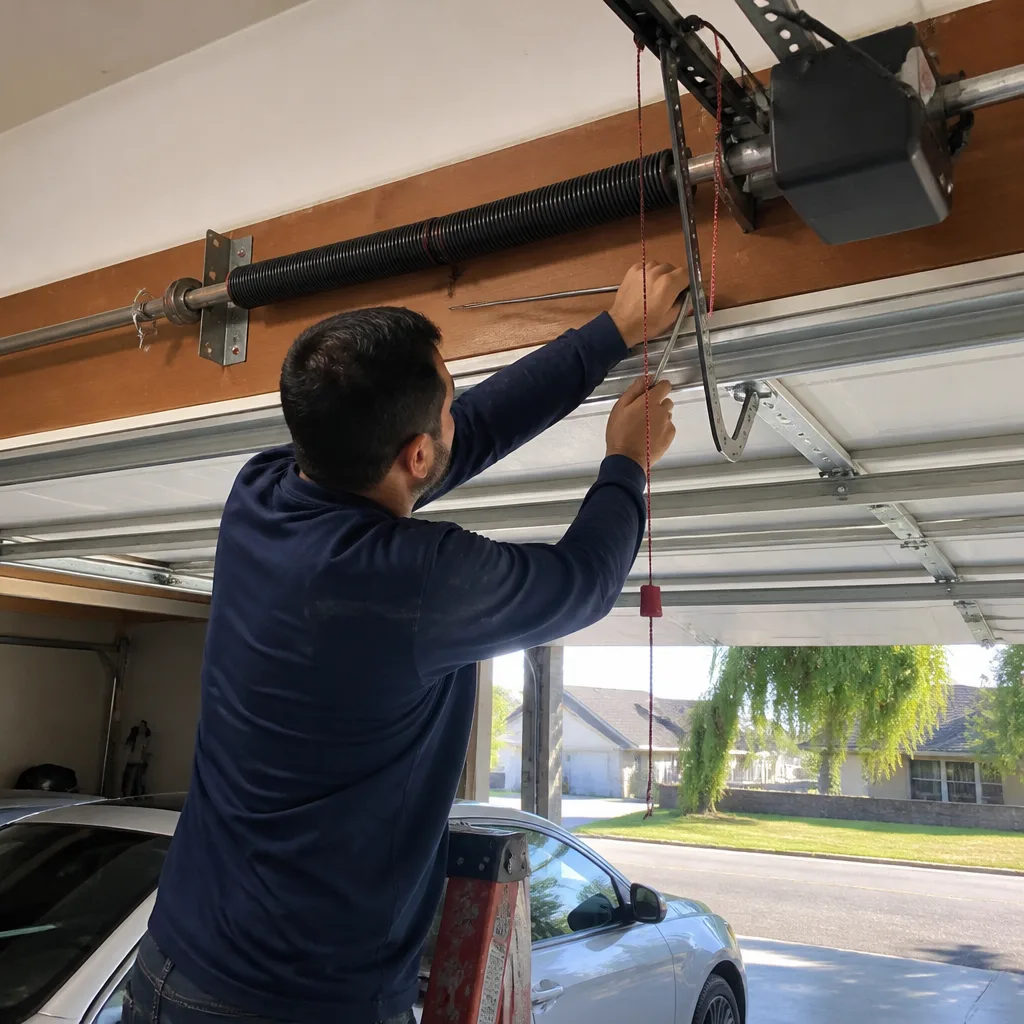
- Rollers and hinges: Open the door manually (pull the release cord with the door closed first to release tension). Listen for grinding, look for wobble in the rollers, and check hinge plates for hairline cracks.
- Balance test: Disconnect the opener and lift the door to waist height. It should stay put, not drift up or slam down. If it drifts more than a few inches, the springs are losing tension.
- Safety sensors: Close the door and wave a broom handle through the beam path near the floor. The door should reverse immediately. If it doesn’t, the sensors need realignment or replacement before daily summer use.
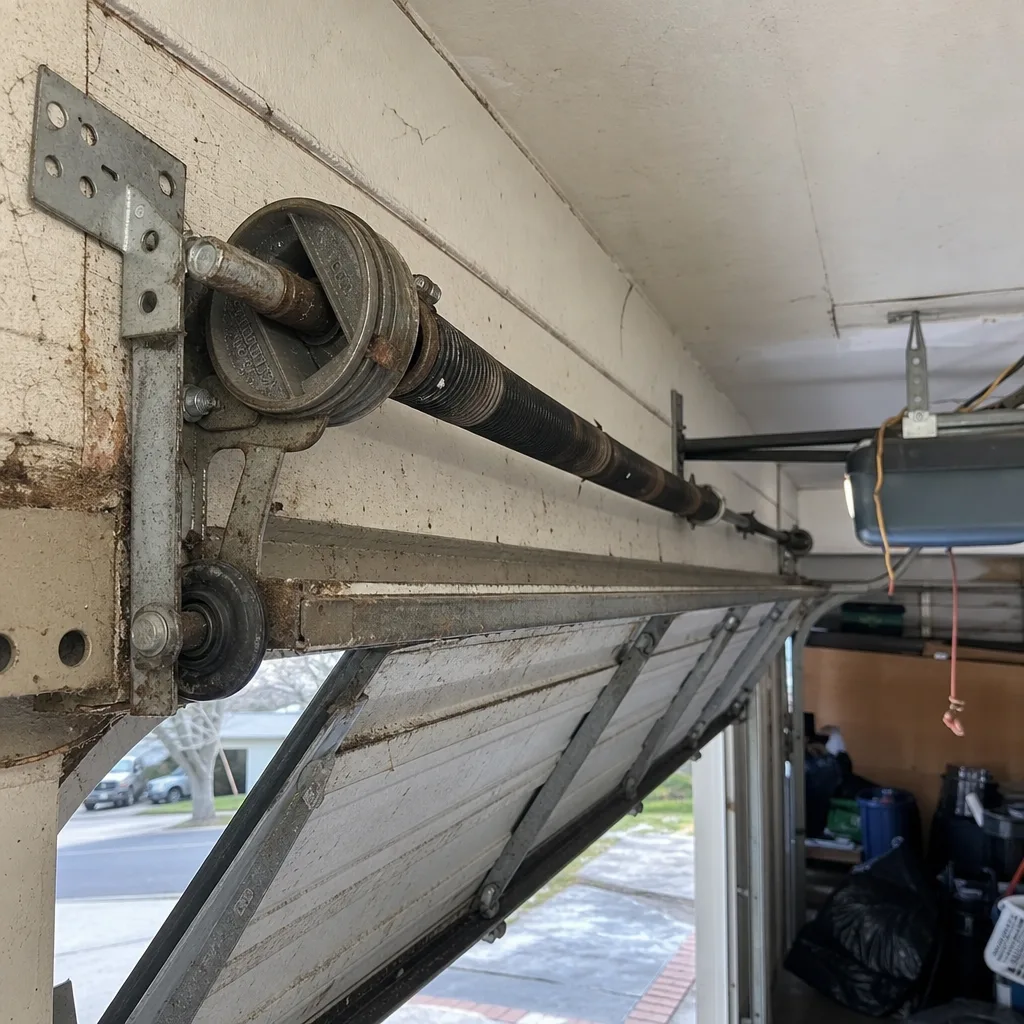
If you find spring cracks or any sign of cable fraying during this inspection, stop and call a professional. Torsion spring failures are the single most dangerous garage door event a homeowner can experience, and they happen without warning. The spring holds hundreds of pounds of stored tension.
Summer (June – September): Opener Overheating and Thermal Expansion
Ontario summers routinely deliver 100°F-plus days, and attached garages run 15 to 25 degrees hotter than outdoor ambient. That puts your garage door opener motor in a genuinely hostile environment. Opener motors are rated for continuous operation at moderate temperatures. When the air inside the garage hits 110°F or higher, the motor’s thermal protection circuit becomes the weak point. You’ll notice it as a door that opens fine in the morning, then refuses to operate or stops mid-cycle in the late afternoon. That’s not a failing opener; that’s physics. The thermal cutoff is doing its job.
There are practical steps that reduce the heat load without replacing anything. If your garage door faces west or south, the panel itself absorbs radiant heat all afternoon and radiates it into the garage. An insulated door or reflective interior panel treatment makes a measurable difference. So does ventilating the garage: even a small exhaust fan mounted high on the wall drops interior temperatures enough to keep the opener below its thermal threshold. And if your opener is older than about 12 years, its motor windings are already losing efficiency, which means more internal heat generation for the same work output. This is where opener-specific expertise matters. We work on LiftMaster, Chamberlain, Genie, and Craftsman openers routinely, and the thermal behavior differs by model. Some have tighter safety margins than others. If you’re near the coast-adjacent parts of Ontario, your summer temps run a bit cooler, but the inland neighborhoods near the 60 freeway see the worst of it.
Summer maintenance priorities
- Check opener motor temperature: After a full open-close cycle in the afternoon, place a hand on the motor housing. If it’s too hot to hold for more than a few seconds, that’s a warning sign.
- Test the auto-reverse: Heat causes sensor misalignment more often than people expect. Thermal expansion shifts the brackets just enough to break the beam.
- Listen for laboring: If the opener sounds strained on hot days but fine on cool mornings, the motor is working against heat-expanded tracks and increased spring tension. This is the canary.
- Inspect cables and drums: At peak heat, cables have less margin for error. Look for any sign of fraying where the cable wraps the drum.
Thermal expansion also changes door balance. As the steel panels, tracks, and hardware expand, the door’s effective weight at the balance point shifts. A door that passed a balance test in April may fail the same test in August. This is normal, but it means the opener is working harder all summer. Our Garage Door Opener Repair in Ontario service regularly sees motors burned out from running months on an unbalanced door that the homeowner never noticed.
Fall (October – November): Santa Ana Wind Hardening
Santa Ana winds are Ontario’s version of winter. They arrive as early as late September and can gust through November with enough force to tear roofing, down power lines, and absolutely punish a garage door that has loose hardware. A standard double-wide garage door presents roughly 120 square feet of surface area. In a 60 mph gust, that’s thousands of pounds of lateral force, and every bit of it transmits through the hinges, brackets, and track fasteners into the frame.
The failure mode we see after every significant Santa Ana event in Ontario is not dramatic panels blowing out. It’s more insidious: brackets that were slightly loose get worked loose further. Track fasteners pull from the studs. Bottom seals tear at the corners where wind-driven dust and grit funnel underneath. None of these failures stop the door from working that week. They all set up a bigger failure later. Loose track plates allow the door to run slightly out of parallel, which wears rollers unevenly and stresses the opener carriage. That’s a $400 repair that started as a $0 fix in October.
Santa Ana prep steps
- Tighten every visible fastener: Use a socket set to check the lag bolts holding the horizontal track to the ceiling, the vertical track to the wall, and the hinge plates to the panels. You should find nothing that moves more than a quarter turn.
- Verify the bottom seal: The bottom seal is your wind and dust barrier. Check the full width for tears, especially at the corners where the seal meets the track. Wind funnels through any gap and pressurizes the garage, which then pushes against the door from inside.
- Test the door in high wind: If the forecast calls for a Santa Ana event and your door has any rattle, squeak, or visible movement while closed, address it before the wind arrives. A rattling door is a door with loose hardware somewhere.
- Secure the emergency release cord: Tie or tuck the release cord so it can’t whip around inside the garage during strong gusts and snag on a vehicle or storage shelf.
Worth noting here: if your door is a sectional model from Clopay, Amarr, or Wayne Dalton, the wind-load rating varies significantly by model and installation. Some doors are rated for high-wind zones and some are not. Most Ontario homes have standard residential doors that were never engineered for Santa Ana gusts, which makes the fastener check even more important.
Winter (December – February): Bottom Seal Stiffening on Cold Concrete
Ontario does get cold at night. Not Midwest cold, but the Inland Empire sees occasional overnight lows in the high 30s, and the combination of cold concrete and low humidity has one specific effect on garage doors: the rubber bottom seal stiffens. When the seal loses its flexibility, it no longer conforms to the concrete slab. Even small surface irregularities in the slab create gaps, and those gaps let in cold air, dust, and pests. On the few genuinely frosty mornings we get, stiff seals also tend to stick to the concrete, which puts extra strain on the opener when it tries to lift the door.
The fix is not re-weatherizing for winter. It’s simply keeping the seal clean and conditioned. Wipe the seal down with a mild cleaner, then apply a rubber conditioner or silicone-based lubricant. This keeps the material flexible through the cold snaps and extends the seal’s life. It’s a 10-minute job twice a winter.
Winter checklist
- Clean the bottom seal: Remove grit, dust, and any caked-on debris that accelerates rubber breakdown and prevents a good seal.
- Condition the rubber: Apply a rubber-safe conditioner to keep the seal supple through cold nights and sudden temperature swings.
- Check the slab edge: Cold weather can cause very small concrete movement. If the door no longer meets the floor evenly, note which side gaps and mention it to a technician.
- Run the door once a week: If you park in the driveway during winter months, your garage door may sit closed for weeks. Cycle it periodically to keep rollers and hinges moving and distribute grease through the bearings.
Winter in Ontario is a low-stress season for garage doors compared to summer and fall. That’s the reason most generic guides get this region wrong. They lean into winter preparedness, and homeowners dutifully follow along while the actual damage is happening in August.
Year-Round: Door Balance and When to Adjust Spring Tension
Every garage door has a balance point. It’s the height at which the door’s weight and the spring’s counter-tension equal out. When the door is correctly balanced, you can stop it at any point in its travel and it stays put. When it’s out of balance, it drifts up or down, and the opener motor picks up the difference. In Ontario’s temperature swing, balance shifts twice a year even on a perfectly healthy door, because the springs and cables physically expand and contract with temperature.
A door that passes the balance test in January at 50°F may fail it in August at 105°F. The spring has expanded in the heat, losing a small amount of effective tension. The panels have expanded too, which changes the door’s geometry slightly. None of this means the spring is worn out. It means the system needs periodic adjustment, and the alternative (letting the opener fight the imbalance) shortens the motor’s life by a large margin.
When to adjust spring tension
- If the door drifts more than 4-6 inches from the half-open position during a balance test, the springs need adjustment regardless of season.
- If the door is noticeably heavier to lift manually in summer than winter, that’s thermal expansion reducing effective tension. A quarter-turn adjustment addresses it.
- If the door opens slightly on its own from the fully closed position in winter, the springs have gained tension as the metal contracted in the cold. Over-tensioned springs are equally damaging to the system.
- If you hear the opener struggling only during temperature extremes, the door is spending part of the year out of balance.
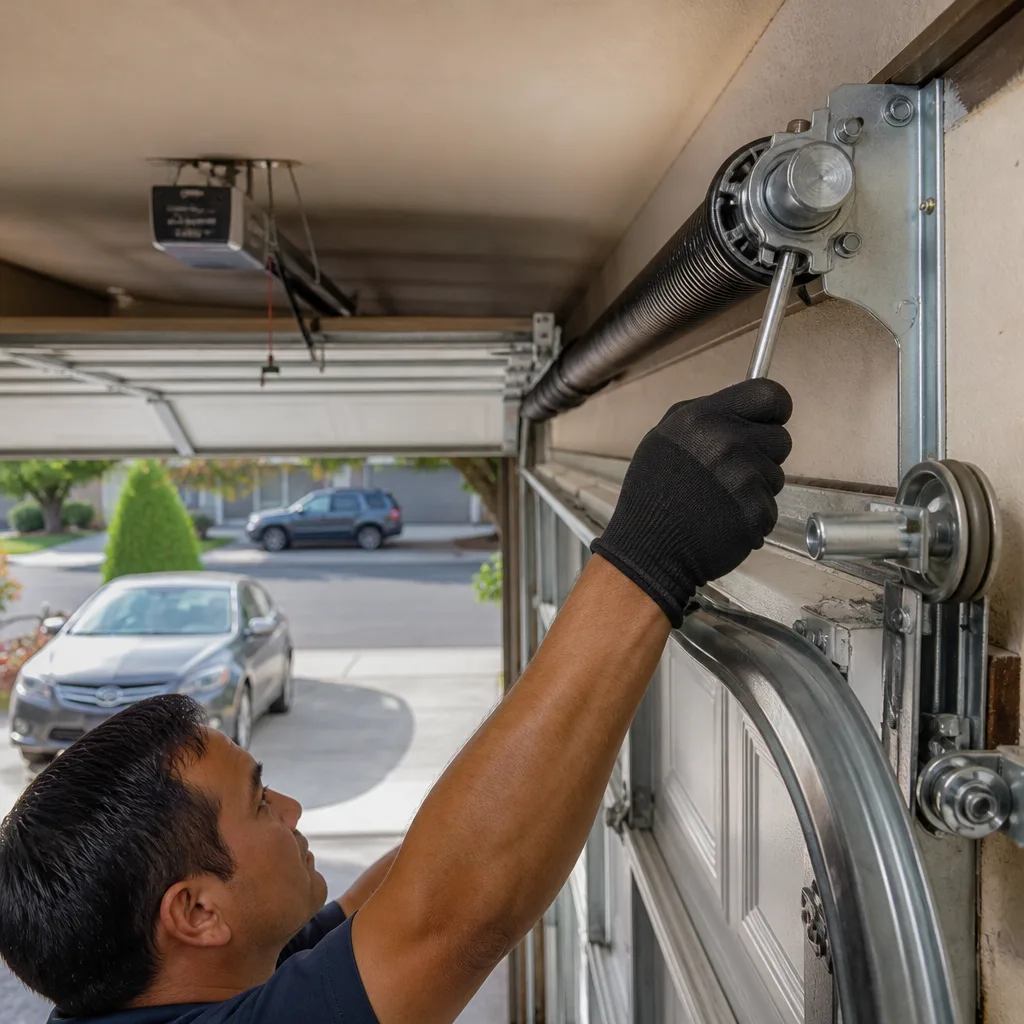
Safety note: Torsion spring adjustment is dangerous work. The springs on a standard double door hold enough stored energy to cause serious injury or death if they release unexpectedly. This is not a weekend DIY project. The right way to handle spring work is to call a professional who works on your specific hardware. We service doors and openers from LiftMaster, Chamberlain, Genie, Clopay, Amarr, Wayne Dalton, Craftsman, and Raynor, so if your system needs adjustment, our Garage Door Repair in Ontario technicians handle it with the proper winding bars and torque procedures. The cost of a service call is a fraction of a hospital bill or a replacement door.
Year-Round: Lubrication Schedule for Inland Empire Conditions
Garage door lubricant breaks down faster in Ontario than in most of the country. High heat, low humidity, and fine dust from the Santa Ana winds all work against the grease in your rollers and hinges. The schedule that works in coastal California doesn’t hold up here. A garage door in Ontario needs lubrication more frequently, and it needs the right product.
Use a lithium-based or silicone-based garage door lubricant, not WD-40. WD-40 is a solvent, not a lubricant. It strips the existing grease and leaves the metal dry. A dedicated garage door grease is what you want, applied lightly.
Lubrication schedule for Ontario
- Every 3-4 months: Apply lubricant to the roller bearings, hinge pivot points, and the spring coils. In the peak heat season (June through September), move to every 2-3 months.
- After every significant Santa Ana event: Wind-driven dust settles into hinges and rollers and accelerates wear. Re-lubricate within a week of a dust-heavy wind event.
- Annually: Lubricate the opener’s chain or screw drive, if your model requires it. Belt-drive openers from LiftMaster and Chamberlain need no lubrication on the belt itself, but the rail benefits from a light wipe-down.
- Any time you hear squeaking or grinding: That’s the sound of metal rubbing metal. Address it immediately before it becomes a worn bearing.
Over-lubricating causes its own problems. Excess grease attracts dust and creates a gritty paste that wears hinges faster. A light film is the target. If you can see gobs of grease, you’ve used too much.
Common Mistakes to Avoid
- Following a Midwest winterizing checklist. Ontario does not require anti-freeze, snow-load reinforcement, or sub-zero lubricant. Spending October on winter prep means skipping the Santa Ana hardening that actually matters here.
- Ignoring a noisy opener because it still works. A grinding or straining opener is telling you something. In Ontario’s summer heat, a struggling motor is often days or weeks from thermal shutdown, not months.
- Replacing the weatherstripping only when it visibly fails. By the time the seal shows visible cracks, it has been leaking air and dust for months. Check it in spring, before the heat season, not after.
- Lubricating the track. The track is not a surface that needs lubrication. Grease on the track collects dust and creates drag. Only the rollers, hinges, springs, and bearings need grease.
- Adjusting torsion springs without proper tools. Using anything other than the correct winding bars is how people get hurt. This is the one repair that should never be attempted with improvised tools.
- Assuming the opener is the problem when the door is out of balance. A door that’s hard to lift manually is a spring or track issue. Replacing the opener fixes nothing, costs hundreds, and leaves the real problem untouched.
- Skipping the safety sensor test. Sensors drift out of alignment from thermal expansion and Santa Ana vibration. A sensor that’s out of alignment means the auto-reverse won’t work when it should, and that’s a genuine safety risk for kids and pets.
When to Call a Professional
Some garage door maintenance is genuinely DIY-appropriate: cleaning the bottom seal, tightening accessible fasteners, lubricating rollers, testing the auto-reverse. Other work should never be attempted by a homeowner. If you see frayed cables, cracked springs, a bent track section, or a panel that has separated from its hinges, stop using the door and call a technician. If your door makes a loud bang and stops working, that’s a spring failure. Don’t try to operate the door manually; the remaining spring can’t support the weight, and the door can drop. If your opener trips its thermal protection repeatedly during summer afternoons, have the motor tested before replacing it. The problem may be the door’s balance, not the opener. Cobblestone Garage Door Repair offers free estimates in Ontario. Call (866) 667-5857 and we’ll tell you what’s actually wrong.
Frequently Asked Questions
A seasonal inspection and lubrication service in Ontario typically runs between $75 and $150 for a standard single or double door, not including any parts that need replacement. If repairs are needed, those are quoted separately before any work begins. For exact pricing on your door, call (866) 667-5857 for a free estimate.
Late spring and early fall are the two critical service windows in Ontario. Spring service prepares the door for the summer heat arc, when thermal expansion and opener overheating do the most damage. Fall service hardens the hardware against Santa Ana winds, which loosen fasteners and tear seals. Missing either window means a higher likelihood of a mid-season failure.
When the interior of your Ontario garage exceeds roughly 105°F, the thermal protection circuit in the opener motor engages and shuts the motor down. This is a protective feature, not a malfunction. Improving garage ventilation, insulating the door, and ensuring the door is properly balanced all reduce the heat load on the motor. If the problem persists after those fixes, the opener motor may be nearing the end of its service life.
Yes. Santa Ana winds regularly gust to 50 mph or higher in Ontario, and a double garage door presents a huge surface area for wind loading. The damage is usually not immediate panel failure. It’s the gradual loosening of track fasteners, hinge bolts, and bracket plates, which then leads to uneven operation, worn rollers, and opener strain. Tightening fasteners before the Santa Ana season is one of the highest-value maintenance tasks you can do.
No. Torsion springs hold enough stored tension to cause serious injury. The correct tools are winding bars, not improvised substitutes, and the procedure must be done in a specific order. Seasonal balance shifts from temperature are normal, but the adjustment should be handled by a technician who works on your specific spring system. Many newer doors from Amarr, Clopay, and Wayne Dalton use springs with different torque specifications, and a generic adjustment can create an unsafe condition.
Every 3 to 4 months for most of the year, and every 2 to 3 months during the high-heat season from June through September. Dust from Santa Ana winds also accelerates lubricant breakdown, so re-lubricate after heavy wind events. Use a lithium or silicone-based garage door lubricant, never WD-40, and apply only a light film to rollers, hinges, and springs.
The Bottom Line
Ontario’s garage doors fail in a predictable seasonal pattern: thermal stress in late summer, wind stress in fall, and seal stiffening in winter. The maintenance calendar that prevents most failures is twice-yearly inspection and adjustment, timed for late spring and early fall. Spring catches the UV damage from winter sun and prepares the door for the heat. Fall tightens everything that has worked loose over the summer and hardens the door against Santa Ana gusts. If you do nothing else, do those two seasonal checks. For everything else, we’re here. Cobblestone Garage Door Repair handles Garage Door Repair in Ontario, Garage Door Opener Repair in Ontario, and Garage Door Installation in Ontario, working on doors and openers from LiftMaster, Chamberlain, Genie, Clopay, Amarr, Wayne Dalton, Craftsman, and Raynor. One call, full service, built to last. Call (866) 667-5857 for a free estimate.
Written by the team at Cobblestone Garage Door Repair, serving Ontario since 2016.
See the difference
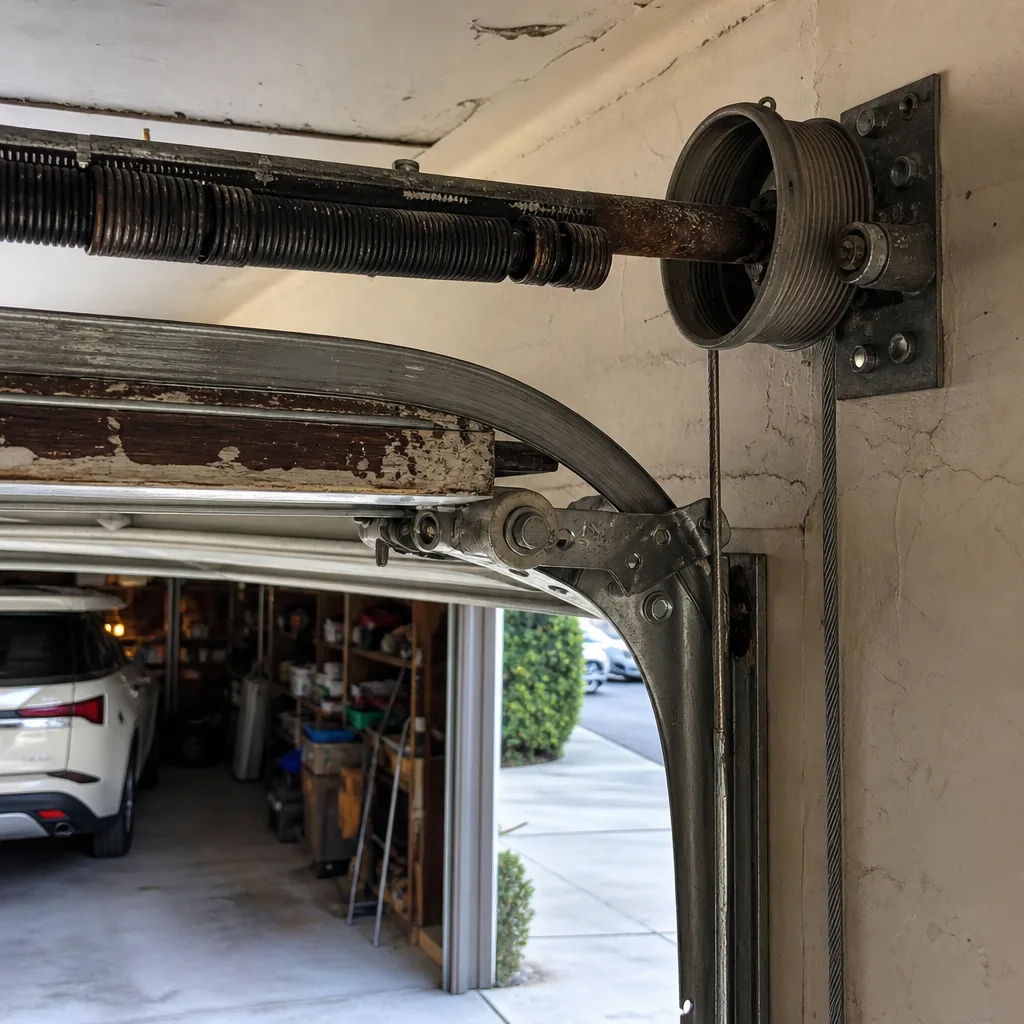 Before
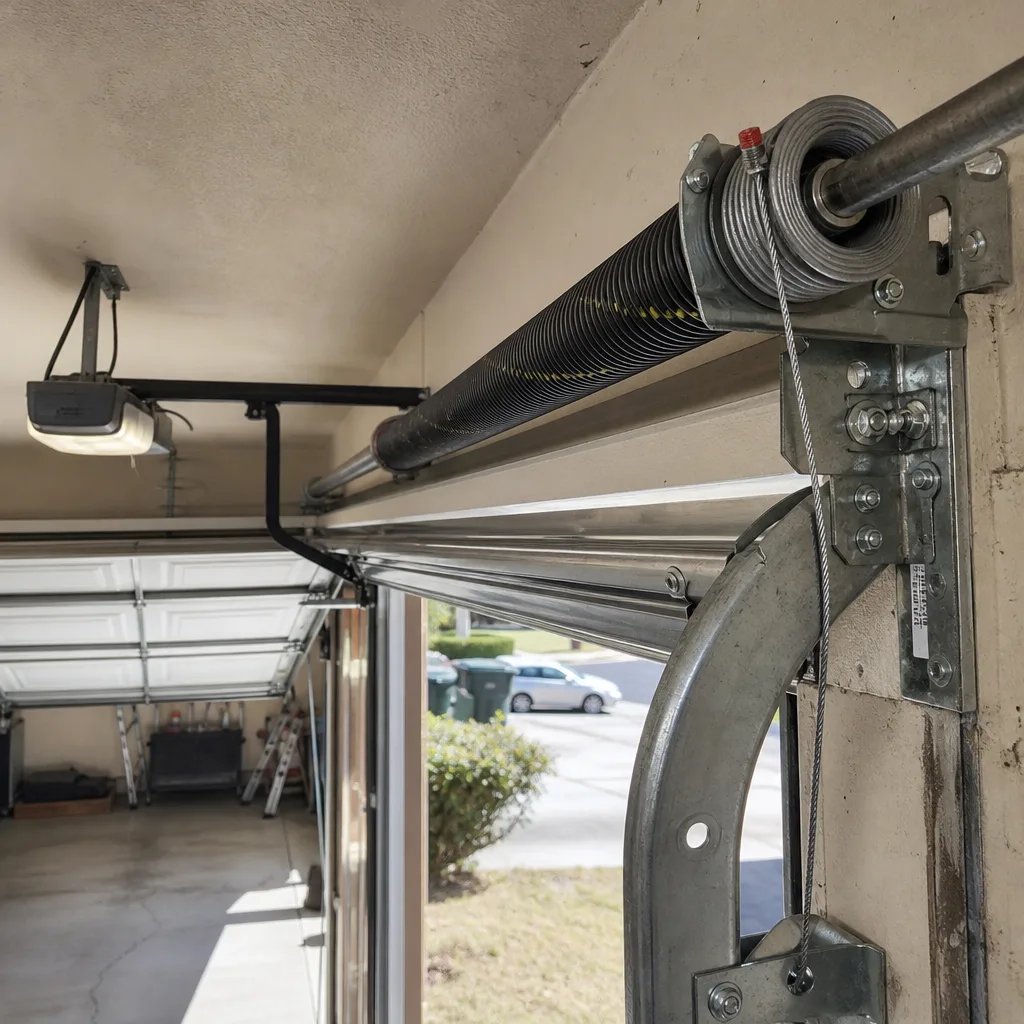 After
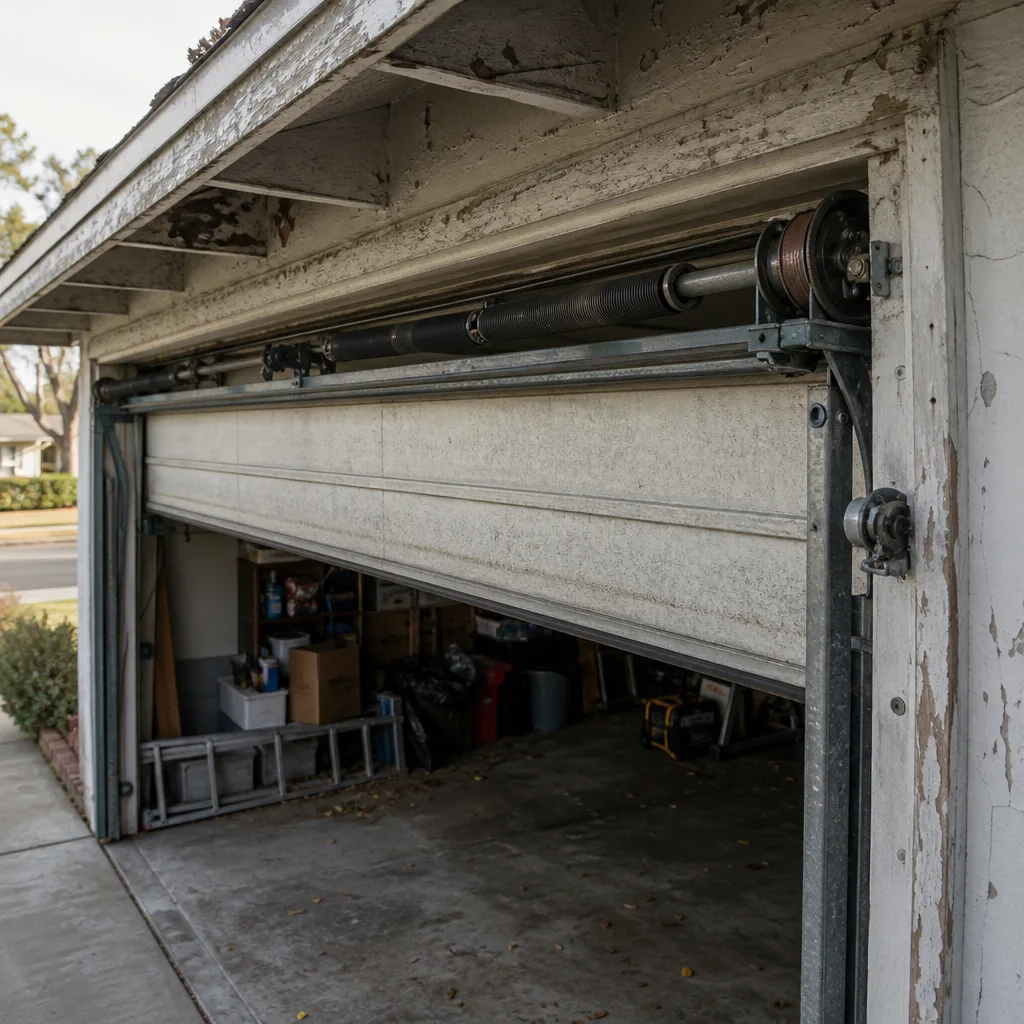 Before
 After
 Before
 After